“Good luck” is two words that cost nothing and carry almost no weight. The people we send it to deserve something with more in it than that. This page is for anyone who has stared at a blank message field knowing the moment called for something real, and come up short. The situation you are writing for shapes everything: what you say before an exam is not what you say before surgery, and what you send to make someone laugh is not the same as what you send to make them feel held. The pages here are organized by context so you can go straight to what fits your moment.
Good Luck Messages That Cost Nothing and Mean Almost Nothing
Good luck messages are what people send when they want to say something but cannot find the actual words. I know this because I have sent that version more times than I can count, usually standing somewhere slightly awkward, watching someone I cared about walk into a moment that mattered. The two words came out of my mouth or off my fingertips before I had really thought about what the moment needed. And even as I said them, I knew they were not quite landing.
The problem is not that the phrase is wrong. It is that it is reflexive. It is what the mouth produces when the brain has not had time to think. The person on the other end of it, the one about to sit an exam they have been studying for all month or wait in a hospital gown for someone to roll them into surgery, can feel the difference between something reflexive and something real. It is a small difference in the words and a large difference in how it lands.
What makes good luck wishes actually work is not the word “luck” at all. It is specificity. It is the quiet signal that says: I see what you are walking into. I know what it costs. I am thinking about you specifically, not just sending a phrase into the air. The situation changes what that looks like, which is the whole reason this page exists.
Why the Situation Changes Everything
The most common mistake people make when sending good luck texts is treating them as interchangeable. What you send to a friend the night before a job interview is not the same as what you send to a parent before surgery. The stakes feel different underneath. The kind of fear involved is different. And so the kind of reassurance that actually helps is different too.
I have watched people use the same “you’ve got this, I’m rooting for you!” for three completely different situations in the same week. The intention behind it was real. But the message itself did not do much work because it did not acknowledge what the person was specifically facing. That is the version that arrives and gets a “thank you!” in return without really landing anywhere.
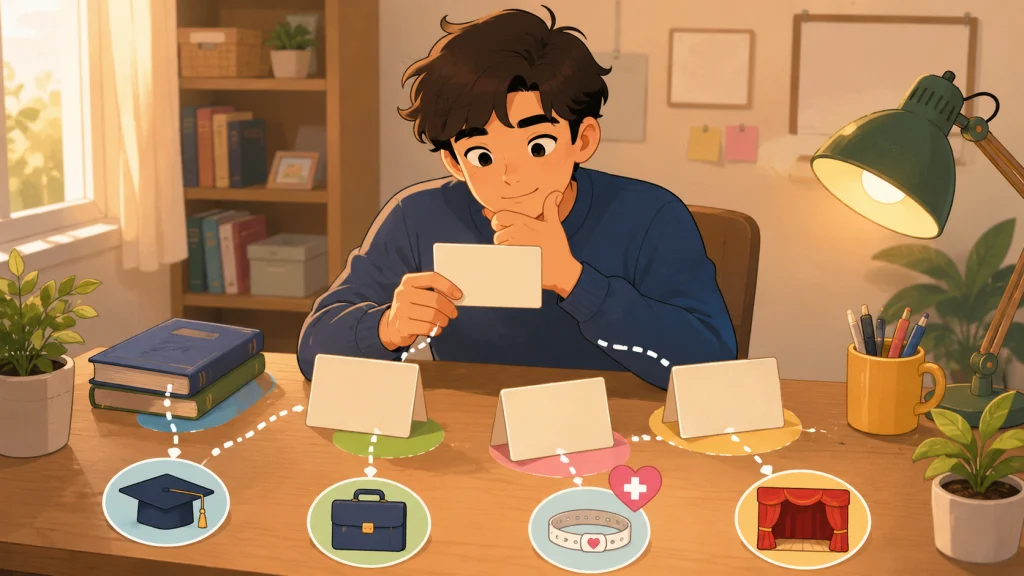
Here is a simple way to think about what each moment is actually asking for:
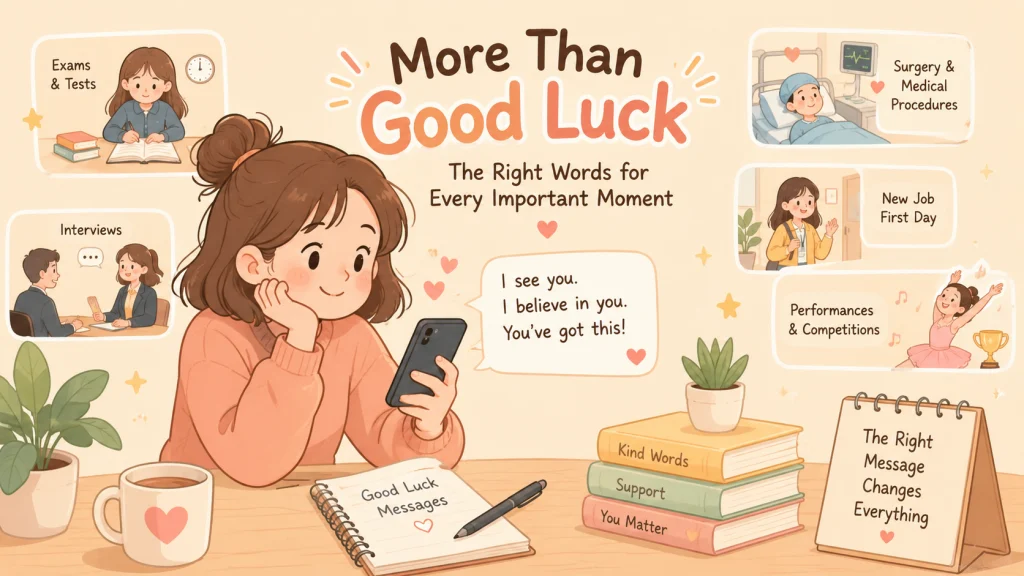
- Exams and tests call for messages that acknowledge the preparation already done, not just the outcome ahead. The work is already in there. What the person needs to hear is that the effort was real, and so is your belief in them.
- Interviews need a slightly different register. There are nerves, but also confidence that needs grounding. The best messages here do not hype the person up beyond recognition. They settle them.
- Surgery and medical procedures sit in a different emotional category entirely. Warmth and steadiness matter more than cheerfulness. The person does not need to be told to crush it.
- First days at a new job sit somewhere between excitement and anxiety, usually at the same time. The message that works holds both without leaning too hard on either.
- Performances and competitions have their own vocabulary, and part of that vocabulary is “break a leg,” though it does not always fit every context people reach for it in.
Each of those moments has its own page here with the actual words. The situation is your entry point. Pick the one that fits and the rest follows from there.
Before the Test, Before the Room
There is a kind of message that gets written the night before something hard, and it is almost always too long. I have written that version. It starts as a text and becomes three paragraphs because you are trying to say everything at once and none of it is landing the way you want. What the person needs before an exam is not a speech. They need to feel seen in one or two sentences and then go to sleep.
The exam context has a specific logic: the work is finished. Studying is over. What you are wishing them luck with is not the preparation, which is already behind them, but the moment of sitting down and doing it under pressure. The messages that work for this acknowledge the effort already banked and then let them go. The messages that do not work usually involve reminding them to stay calm, which is often the one thing that makes someone feel less calm.
Interviews are slightly different in what they ask from a message. There is still something the person can do before walking in, a final answer rehearsed, a good night’s sleep, the right shirt. Wishing someone luck before an interview is part reassurance and part small push. What they need to feel is that you see their ability, not just their anxiety. Those are two different things to address and most off-the-cuff good luck texts only get to one of them.
For anyone who wants to send daily messages of encouragement throughout a whole study period or a stretch of job applications, there is a broader set of words for that kind of ongoing support. A single well-timed message before the big day is one thing. Showing up with the right words all the way through is something else, and the two work differently on the person receiving them.

When the Weight Is Heavier
Surgery is the context that most people get wrong when they are wishing you luck, and not because they do not care. It is because the situation makes people reach for lightness when heaviness is actually what the moment needs. Sending someone “you’ve got this!” before they go under general anesthesia comes from a real place. But it does not quite fit. The person in that hospital bed is not asking to be told to crush it. They are asking, in whatever way they are able to ask, to feel like someone is with them in it.
What to write before surgery is genuinely hard. The fear underneath it is real and sometimes large, and a message cannot make that go away. What it can do is sit beside the person in that feeling without trying to move them out of it too quickly. That is the whole difference between a message that helps and one that accidentally minimizes.
The first day at a new job is different in almost every way, but it shares one thing with surgery: the person is walking into something unfamiliar and there is nothing left to prepare. What they need from a message in that moment is the quiet certainty that someone is watching and rooting for them, without making it feel bigger than it already feels inside their own chest.
| The moment | What a good message is actually doing |
|---|---|
| Exam or test | Acknowledging the work already done, not just the outcome still ahead |
| Job interview | Grounding the person in their own ability before the nerves take over |
| Surgery or procedure | Sitting beside them in the weight of it rather than trying to lift it away |
| First day at a new job | Matching the real mix of nerves and excitement without leaning too hard on either |
| Performance or competition | Energizing without overpromising, and knowing when a laugh serves better than a pep talk |
That difference is why messages that wish someone luck rarely transfer cleanly from one situation to another. The moments look similar from the outside. What the person inside them needs from you is not the same at all.
When Funny Is the Right Call
There are moments when a funny good luck message is not just acceptable but genuinely the better choice. Usually these are moments when the person already knows, somewhere underneath the nerves, that they are going to be fine. What they need from you is not reassurance but something that makes them exhale and smile before they walk in. That is a different job, and humor does it better than warmth in those situations.
The question of whether to go funny is always about reading the relationship first, the situation second. I can send a ridiculous message to certain people in my life and they will love it. The same message to someone else would land completely flat or worse, make them feel like their anxiety is being dismissed. The relationship does the heavy lifting. The joke is almost secondary.
What makes a funny message work when it does work is that the humor lands on the situation rather than on the person. It is self-aware about the absurdity of the moment, not poking at the person’s nerves. And the best funny messages still carry warmth underneath the joke. Funny and cold is just cold. The laugh should feel like it is coming from someone who is fully in your corner, even while making you snort.
Best Wishes Messages Built Around a Phrase
“You’ve got this” has been repeated so many times that it has started to feel automatic, like a shorter version of “good luck” that also ends in a period. And yet when the right person says it at the right moment, it still lands. The question is why it works in some situations and evaporates in others, and what to build around it when it is the right thing to say.
What I have found is that the phrase works when the person receiving it actually believes you mean it specifically about them. If it comes from someone who knows your work, your preparation, your particular kind of stubbornness when things get hard, then it carries real weight. If it comes from someone filling space with positive words, it dissolves immediately. The words are the same in both cases. The relationship behind them is what changes everything.
“Break a leg” operates differently. It carries its own history and it sits most naturally inside performance contexts: theater, comedy, music, auditions. In those worlds it is native language. In a corporate interview it can feel slightly off, the way a costume works perfectly on stage and reads as strange on the street. The phrase is not wrong in other contexts, but it does not quite fit either.
When sending good luck before a performance specifically, “break a leg” is doing something that “good luck” cannot do: it signals that you understand the world the person is performing in. That shared understanding is part of what makes it feel different from a generic wish. Both phrases, “you’ve got this” and “break a leg,” are covered on their own pages here, with fuller context on when they work, when they fall short, and what to reach for instead.

Final Thoughts: Start With the Moment, Not the Message
The most useful reframe I can offer on sending good luck is this: start with the situation, not the words. The situation tells you the tone. The tone tells you what kind of message will actually help. Working in that order is much faster than staring at a blank field trying to feel your way into something that sounds right.
If you know what the person is walking into, you already know more than most messages give credit for. Use that. The pages below are organized by that exact logic: pick the moment, and the words follow from there.
Good Luck, Organized by What You Are Actually Facing
Each of the pages below focuses on one specific context. The differences between them are real, and the words that fit one situation often do not fit another. Start with the moment that matches yours.
| Where to go | What it covers |
|---|---|
| Good luck messages for exams | What to send before a test, from a light check-in the morning of to something that acknowledges the full weight of a high-stakes exam |
| Good luck on your interview messages | Pre-interview words that ground the person in their own ability, rather than adding to the pressure already there |
| Good luck before surgery messages | What to write when someone is facing something medical and cheerfulness is the wrong register entirely |
| Good luck for new job first day messages | Messages that hold the specific mix of nerves and excitement that first mornings carry without tipping too hard in either direction |
| Funny good luck messages | When the moment calls for a laugh more than a pep talk, and how to tell which is actually which |
| You’ve got this messages | How to build something real around the phrase, and when three words on their own are already enough |
| Break a leg messages | Where the expression belongs, what it actually means, and what to reach for when it does not quite fit |
FAQs
🍀 Is “good luck” actually a bad thing to say?
Not bad, just thin. It works as a gesture and it is better than silence. The problem is that it does not say much about the person or what they are walking into. If you have time to add even one more sentence, the message becomes significantly more useful.
📱 What makes good luck texts actually land?
Specificity, mostly. Name the thing the person is doing. Acknowledge what it is costing them. Two or three sentences that say “I see what you are walking into” do more work than a paragraph of general encouragement.
😂 When is a funny message okay before something stressful?
When the relationship can hold it and the stakes are not too heavy. Humor fits before an exam or an audition. It almost never fits before surgery. Read the person before you read the occasion.
🎭 Does “break a leg” actually mean good luck?
It came from theater and it still lives most naturally there. For performances, auditions, and anything involving a stage, it works. In a job interview or before a medical procedure, it can feel slightly out of place, not wrong, just not quite right either.
💬 How do you wish someone luck without sounding generic?
Mention one specific thing: what they have prepared, what they are good at, or what the moment specifically requires from them. One concrete detail is what separates something real from something reflexive.
🩺 What should I say to someone before a medical procedure?
Lean toward warmth over cheerfulness. They do not need to be told to crush it. A message that says, quietly, that you are thinking of them and they are not facing it alone will do far more than a pep talk.