A good morning message lands differently depending on who you are writing to, what tone fits the moment, and what the person may be carrying into the day. Some mornings call for something tender. Others call for something quick, funny, faith-rooted, or quietly steady. This is where those versions live, organized by what actually changes what the message should do.

Good morning messages are not all asking the same thing of words
A good morning message arrives before the noise does. Before the emails, the to-do lists, the small frictions that collect over the course of a day. The person reading it is still in the quiet part of their morning, which means the words can land in a way they would not at noon. That window is small, but it is real.
I notice this in how people remember morning messages that mattered to them. Not the exact wording, usually, but the feeling that came with it. There was a stretch when I was traveling alone for a long time and a friend sent me something small most mornings, nothing elaborate, nothing that required a response. I did not always read it right away. But knowing it was there made the day easier to start. The message itself was not doing all the work. The fact of it was.
That said, a message that does not fit the moment can still land flat even when the intention is good. The good morning wishes that miss are not usually wrong about the feeling. They are wrong about the context. Too long for someone who is already running. Too cheerful for someone walking into something hard. Too generic for someone who needed to feel seen specifically. The right version depends on what kind of morning this really is. Here is what is covered:
- By relationship, for a romantic partner, a close friend, or someone far away
- By tone, when the message needs to be funny, uplifting, or grounded in faith
- By format, when brevity is the right choice for the morning
- By situation, when what is happening in the person’s day matters more than anything else
The right one is in here. It starts with knowing what you are actually trying to make someone feel.
When the relationship is close and the feeling is specific
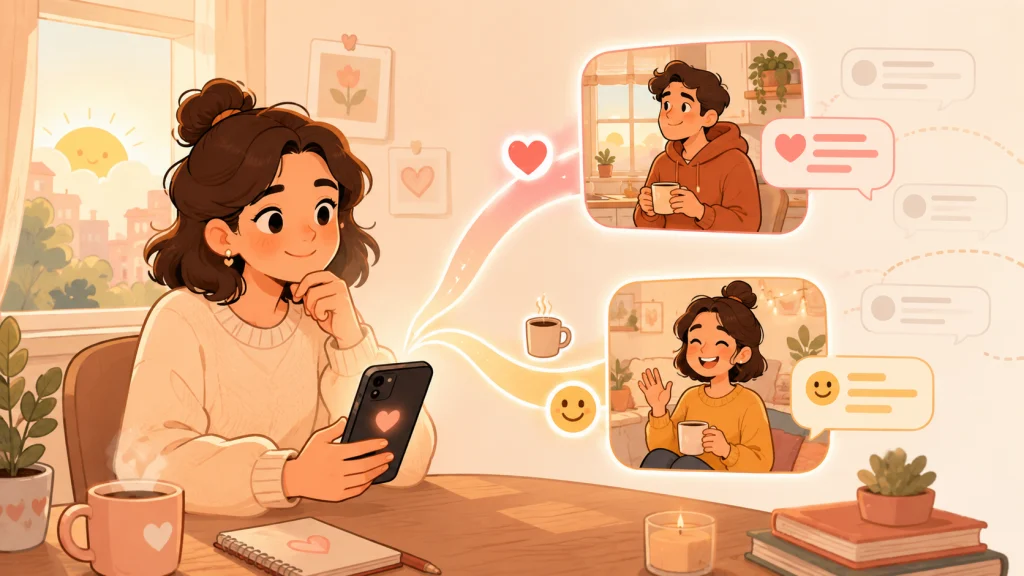
Most morning messages fall into this first category: you know exactly who you are writing to, and the closeness of that relationship is already built into every word you choose. The question is not whether to be personal. It is how personal, in what direction, and with how much weight.
Romantic relationships and deep friendships both call for morning messages, but they ask for different things. With a partner or someone you are developing feelings for, the message carries a particular intimacy before you write a single word. With a close friend, there is more room to play, more room for shared shorthand, more permission for the casual warmth that close friendships run on. Both matter. They just require different instincts.
Writing to a partner or someone you’re falling for
The most common mistake in morning messages for a romantic partner is trying to do too much. People reach for something beautiful and end up with something dense. The best ones I have seen are honest and specific rather than elaborate. Not long and layered, but close to what you would actually say out loud across the kitchen. Short, real, unmistakably yours.
There is an art to writing something that feels intimate without feeling heavy. Morning is not usually the time for long emotional processing. It is the time for making someone feel held in just a few words. Good morning message for her goes deeper into this, including what tends to land and what tends to get saved but never replied to.
Writing to a friend you want to check in on
A morning message to a close friend operates on a different frequency. There is more permission for humor, for warmth that comes through playfulness, and for messages that are clearly from you and no one else. The stakes may feel lower, but that does not mean the message matters less. Some of the most meaningful morning messages I have ever sent have been to friends, not partners.
Where these tend to go wrong is when they lean too generic. A message that could have gone to anyone reads like it went to no one. The closer the friendship, the more obvious that becomes. Good morning messages for a friend covers this, with variations that fit different kinds of friendships and different reasons for reaching out.
When distance is part of the equation
Long distance changes what a morning message is for. In a relationship where two people share proximity, a morning message is a warm addition to a day that already has closeness built into it. When there is distance, the message may be one of the only real points of contact available in a given day. That shifts the job it has to do.
The challenge is not finding something to say. Most people in that situation have plenty to say. The challenge is finding words that feel like presence rather than just information. A message that reads like a check-in or a status update lands very differently from one that makes the other person feel, for a moment, a little less far away. The gap between those two things is usually in the specificity of the language, not the length.
There is also the time zone question, which is a real complication that most good morning message ideas skip past entirely. A message sent at the wrong local time can feel more like an intrusion than a gesture. Good morning messages for long distance addresses the particular texture of writing for the morning when geography is working against you.

When the tone matters more than the relationship
Sometimes what drives the message is not who you are writing to but the energy it needs to carry. A friend who responds best to humor needs something different from someone whose mornings are quiet and reflective. Someone whose faith is the first thing they reach for in the day needs something different still. Getting the tone wrong can make the warmest intention feel slightly off.
This is especially true when you know someone’s morning rhythm well. Sending a cheerful motivational message to someone who finds that style exhausting, or something low-key and casual to someone who reads that as cold, leads to the same problem: the message does not land the way you meant it to. The relationship is not the only variable. How the person actually starts their day matters too.
When the point is to make someone smile first thing
A funny good morning message has a short window to work in. The humor has to be quick enough to land before the reader has had coffee, specific enough to feel personal rather than forwarded from somewhere, and light enough to not require effort at 7 a.m. That is a narrower brief than most people realize when they sit down to write one.
The ones that work best come from shared history. An inside reference, a callback to something that happened between you, a joke that only works because of the specific relationship. Generic humor is still humor, but it does not carry the same warmth as something that clearly came from you, for that person, on that particular Tuesday. Funny good morning messages has variations across different registers of humor and different relationship types.
When someone needs something to carry into the day
An inspirational morning message works when it is honest and when the uplift is proportionate to the situation. The version that does not work sounds like a motivational poster: generic and bright and asking nothing of the sender. People can feel the difference between something chosen carefully and something forwarded from a group chat without much thought.
What makes this kind of message land is grounding it in something real. Not “you’ve got this” in isolation, but something that acknowledges the specific weight of what the person is carrying and then offers them a little steadiness anyway. Inspirational good morning messages covers the balance between warmth and substance, and the variations that fit different situations.
For someone whose faith is built into their morning
A faith-rooted morning message is its own category. Not because the principles are different, but because the vocabulary is different, and using it well requires genuine familiarity with the tradition. A message that borrows religious language without understanding it reads immediately as borrowed. For someone whose morning starts in prayer, a message that reflects shared faith can feel like a profound kind of closeness. One that does not ring true can feel like the opposite.
This is one of those places where specificity matters more than almost anything else. Not just “I’m praying for you” as a phrase, but what you are actually praying for, or a verse that fits the real moment. Christian good morning messages is written with that in mind, with messages that feel grounded in faith rather than borrowed from it.
When the format is the whole decision
Not every morning message needs to be thought out at length. Some of the best good morning texts are a single line. The decision to go short is not a lesser choice. In many situations, it is the better one, and for reasons worth understanding rather than just defaulting to.
Morning is a compressed window. Most people are moving quickly or still waking up. A long message asks something of the reader that a short one does not. It requires attention, a decision about whether to read it now or save it for later, a moment of mental settling that not everyone has first thing. A short message asks for very little. It arrives, it lands, it starts the day. That simplicity can be a form of consideration, not a shortcut.
There is also something about brevity that communicates confidence. A short message does not hedge. It does not pad. It says the thing and stops. That directness can feel more intimate than a longer message, not less. Short good morning messages covers both the format and the craft behind making a short message feel complete rather than thin.
When the situation is doing most of the work
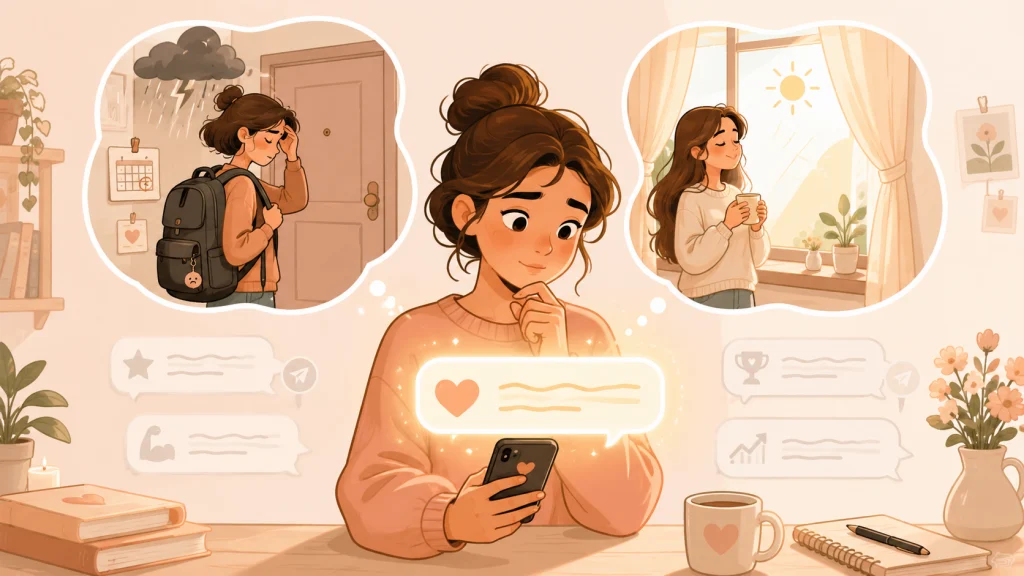
Sometimes what drives a morning message is not the relationship or the tone. It is what the person is walking into that day. Someone heading into something difficult. Someone you have not thought to reach out to in a while and then, for no particular reason, find yourself thinking about on a Tuesday morning. These messages require more care, because the stakes of getting them wrong are real in a way that a casual check-in is not.
The pattern I keep seeing with situation-driven morning messages is that people overthink the opening and underthink the body. They spend a long time figuring out how to start and arrive at something that dances around what they actually want to say. The better instinct is to figure out what you genuinely want the person to feel after reading it, and work backward from there.
When someone is walking into something hard
This is one of the most specific and most valuable uses of a morning message. Someone heading into a difficult day, a hard conversation, a medical appointment, or a situation they have been dreading needs something different from a general morning greeting. They need to feel seen. Not coached, not rushed into optimism, not gently corrected out of feeling bad. Seen.
The version that tends to miss acknowledges the hard thing and then immediately tries to fix it with encouragement. “I know today is tough but you’ve got this.” It means well. It can also feel like a skip over the weight of the moment. What usually works better is sitting with the reality for a sentence before offering anything. Good morning messages for someone having a hard day addresses this directly, including what to say when you do not know how to say it.
When there’s no particular reason to send one
The no-reason morning message is, in some ways, the hardest to write. There is no event, no crisis, no clear prompt. Just the fact of thinking about someone and wanting them to know it. That is a genuine impulse, and it can easily produce something that arrives sounding strange or out of nowhere, as if something must be wrong.
The key is writing something that makes the randomness feel like the point, not like something that needs explaining. A message that says “I was thinking about you this morning, no particular reason, hope your day is good” is most of the way there. The honesty of the “no reason” is what makes it land. Good morning texts for no reason covers how to make this kind of message feel warm rather than odd.
Final Thoughts: Start with the person, then find the words
The morning messages that stay with people are usually the ones that began with a clear picture of the person, not a clear picture of the message. The words are the last step, not the first. The first step is knowing who you are writing to and what they might need from the start of their day. Everything else follows from that.
The messages that miss usually start in the wrong place: a vague feeling of wanting to send something, followed by a search for the right words with no clear destination. The destination matters. Once you know what you want the person to feel, and why this particular morning is worth reaching out, the words tend to come more naturally than you would expect.
If none of the specific versions above quite fits what you are looking for, general good morning messages has a broader collection for the everyday version of this, the ones that are not tied to a specific relationship type or situation but still feel like they came from a real person. And if you are thinking about how morning messages fit into the larger rhythm of reaching out consistently, daily messages goes wider, looking at the different kinds of check-ins that keep people close when life keeps moving them apart.
Good morning messages, by relationship, tone, and situation
Every version of this moment has its own page. Here is where to find the one that fits what you are actually trying to say.
| Where to go | What you will find there |
|---|---|
| Good Morning Message for Her | Messages for a romantic partner or someone you have feelings for, with a focus on warmth and intimacy over length |
| Good Morning Messages for a Friend | Messages for close friends, ranging from warm and sincere to playful depending on what the friendship calls for |
| Good Morning Messages for Long Distance | Messages written for when the morning carries extra weight because the other person is not nearby |
| Funny Good Morning Messages | Humor-first messages that are quick to land and specific enough to feel personal rather than forwarded |
| Inspirational Good Morning Messages | Messages with enough warmth and substance to genuinely shift how someone starts their day |
| Christian Good Morning Messages | Faith-rooted messages for someone whose morning begins in prayer, written to feel grounded rather than generic |
| Short Good Morning Messages | Brief messages that say the right thing without asking too much of someone who is still waking up |
| Good Morning Messages for Someone Having a Hard Day | Messages for when someone is walking into something difficult and needs to feel seen more than encouraged |
| Good Morning Texts for No Reason | Messages to send when you are thinking about someone and want them to know it, without a specific occasion behind it |
| General Good Morning Messages | A broader collection for everyday mornings, when no specific relationship type or situation is the deciding factor |
The right one is in here. It starts with knowing which version of this morning you are actually in.
FAQs
☀️ What makes a good morning message actually feel good to receive?
Specificity, mostly. A message that could have gone to anyone reads like it went to no one. The ones that land are the ones where you can tell it came from a real person who knows the specific person on the other end. That does not have to mean long. It just means intentional.
💬 How long should a good morning text be?
Shorter than you think. Most people read morning messages in the first few minutes after waking, before they are fully in the day. A message that takes more than a few seconds to read is asking something of the person at a moment when they do not have much to give yet. One to three sentences is usually the right range.
🤔 What do you say in a good morning message when you have no idea what to say?
Start with what is true. If you are thinking about the person, say that. If you hope their day goes well, say that. The simpler and more honest the message, the better it usually lands. You do not need something poetic. You need something real.
📱 Is it strange to send someone a good morning message every day?
Not if the relationship supports it. In close friendships and romantic relationships, a daily morning message can become a rhythm both people look forward to. The version that reads as strange is when it is one-sided and the other person has not shown they welcome it. Context matters more than frequency.
💛 What is the difference between good morning wishes and a good morning text?
In practice, not much. “Wishes” tends to carry a slightly more affectionate or formal tone. “Text” describes the medium more than the feeling. Either way, what makes it work is the same: it should feel personal, warm, and like it came from you specifically.
🌍 How do you send a good morning message to someone in a different time zone?
Send it their morning, not yours. If you are ahead, schedule it. If you are behind, send it early. A message that arrives at 2 p.m. saying good morning can feel more awkward than warm, and it misses the whole point of a morning message: the feeling of someone thinking of you before the day begins.