Words of wisdom aren’t the same as words of comfort, and mixing the two up is where most messages go wrong. Wisdom doesn’t try to make someone feel better right away. It tries to help them see something they couldn’t quite see on their own, which is a different job entirely. Here you’ll find short lines worth sharing, words of wisdom for a friend who needs perspective, words for the moments when someone’s life is visibly shifting, and a few honest sentences for the kind of decision that keeps a person up at night. From here, you can also move into more specific territory: strength, change, purpose, or the particular stillness of standing at a crossroads.

Some moments call for encouragement. Some call for something else.
There’s a difference between someone needing to hear “you’ve got this” and someone needing to hear something that actually shifts how they’re looking at their situation. The first is encouragement, and it has its place. The kind of uplifting messages that lift someone’s mood in the moment are exactly right for a hard week, a bad day, a tired Tuesday. But there’s another kind of moment, the one where someone isn’t just discouraged; they’re stuck. They’re looking at the same problem from the same angle they’ve been looking at it from for weeks, and what they need isn’t more cheering on. It’s a sentence that turns their head slightly, so they see the thing from somewhere new.
That’s what words of wisdom are for. Not louder encouragement, but a different angle. The best ones are short enough to remember and specific enough to actually mean something, which is rarer than it sounds. Most of what gets passed around as “wisdom” online is so general it could apply to anyone, which means it really applies to no one. What follows are words of wisdom built to avoid that, organized by the moment they’re meant for and the person who might need them.

What makes words of wisdom useful instead of vague
I’ve noticed that the wisdom that actually stays with people almost always has one thing in common: it names something specific about how people behave, not how they’re supposed to behave. “Everything happens for a reason” doesn’t do much for anyone, because it asks nothing of the person hearing it and tells them nothing about themselves. Compare that to something like “the thing you’re avoiding is usually the thing that would help most.” That one asks something. It points at a behavior the person probably recognizes in themselves, right now, today.
The second thing useful wisdom does is leave room. It doesn’t tell someone what to do. It gives them something to think about, and then it gets out of the way. I’ve sent messages to people going through something hard where I genuinely had no advice, nothing useful to offer about their decision, but I had a sentence that seemed to fit the shape of what they were feeling. More often than not, that sentence did more than advice would have, because it didn’t ask them to do anything except sit with it for a moment.
The third thing, and this one’s easy to miss, is that good wisdom doesn’t pretend to have come from nowhere. The lines that land hardest usually sound like something a person really thought, in a real moment, not something carved onto a poster. Keep that in mind as you read through these. The ones that feel like they’d fit in an actual text message, sent by an actual person, are the ones worth using.
Short words of wisdom to share
Sometimes the moment doesn’t call for a paragraph. It calls for one line, sent at the right time, that the other person can carry with them for the rest of the day. These are built to be sent on their own, no setup needed.
- Most of what feels urgent today won’t even be a memory in a year.
- You don’t have to feel ready to be ready. Most people start before they feel it.
- The version of this that scares you is usually smaller than the version you’ve built up in your head.
- Not deciding is still a decision. It just lets time decide for you instead.
- The people who seem the most certain are usually just the ones who’ve made peace with not being certain.
- What you’re avoiding is rarely as bad as the avoiding itself.
- You’re allowed to change your mind. That’s not the same as giving up.
- Comparing your year four to someone else’s year twelve isn’t fair to either of you.
- Sometimes the bravest thing is doing the boring thing, every day, when no one’s watching.
- You won’t remember most of your worries. You’ll remember what you did anyway.
- A quiet next step is still a next step.
- You don’t need the whole answer before you do the next honest thing.
Any one of these can stand alone, but some moments need a line that feels a little more personal, especially when you’re sending it to someone you care about.

Words of wisdom for a friend who needs perspective
When you’re sending words of wisdom to a friend, the line has to feel close enough to be personal but gentle enough not to sound like a lecture. The goal isn’t to fix their life from the outside. It’s to offer a sentence they can hold while they find their own footing again.
- You don’t have to solve your whole life tonight. You only have to be honest about the next thing in front of you.
- I know this feels like the whole story right now, but I promise it is only one chapter.
- You are allowed to outgrow a version of your life that once made sense.
- The fact that this is hard doesn’t mean you’re doing it wrong. Some good choices still hurt while you’re making them.
- You don’t need to become someone else to get through this. You may just need to trust the part of you that has survived before.
- Give yourself credit for the things you’re carrying quietly. Invisible effort is still effort.
- Sometimes clarity doesn’t arrive as a big answer. Sometimes it arrives as one small thing you can no longer ignore.
- Whatever you choose, choose it from self-respect, not fear of disappointing everyone else.
If your friend is going through a bigger shift, though, a simple line may not be enough. Life transitions have their own strange weather, and the words that help there usually need a little more room.
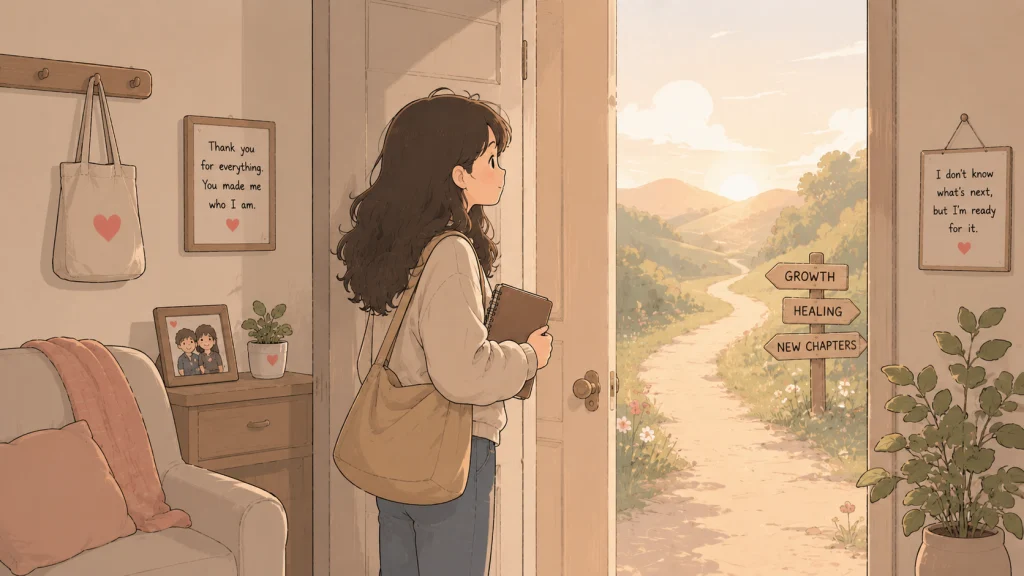
Words of wisdom for life transitions
Transitions are strange because they often look like nothing from the outside. A new city, a new job, an ending relationship, a kid leaving home, the years after a big change has settled into ordinary life. From the outside it can look like someone’s just living. From the inside, it can feel like standing in a doorway that won’t close behind you and won’t open in front of you either. The words that help here usually acknowledge that in-between feeling instead of rushing past it toward whatever’s next.
One thing I’ve come back to more than once is the idea that you don’t have to know what the next chapter is called while you’re still living it. People put a lot of pressure on themselves to understand a transition while they’re in the middle of it, as if naming it correctly will make it easier. Usually the opposite is true. The transitions that make sense are the ones you can only see clearly once you’re through them.
- The space between who you were and who you’re becoming is supposed to feel unfamiliar. That’s not a sign something’s wrong.
- You don’t owe anyone a story about why you’re changing direction. Not yet, and maybe not ever.
- A lot of people overestimate how long the hard part of a transition lasts, and underestimate how much they’ll have changed by the end of it.
- It’s okay to grieve the version of your life you thought you’d be living right now, even while you’re building a new one.
- The new normal doesn’t arrive all at once. It shows up in small moments, usually after you’ve stopped looking for it.
- You’re allowed to be excited and terrified about the same thing. Most big changes come with both.
- Nobody adjusts to change on a schedule, no matter how many people around you seem to.
- The version of you on the other side of this won’t look back and wish you’d skipped the hard part.
- Sometimes the most honest thing you can say about a transition is “I don’t know yet,” and that’s allowed to be the whole answer.
- What feels like starting over is usually more like continuing, just from a different starting point than you expected.
Sometimes a transition eventually becomes one clear decision, made on one ordinary day, that the person can’t put off any longer. That’s a different kind of moment, and it calls for a different kind of wisdom.
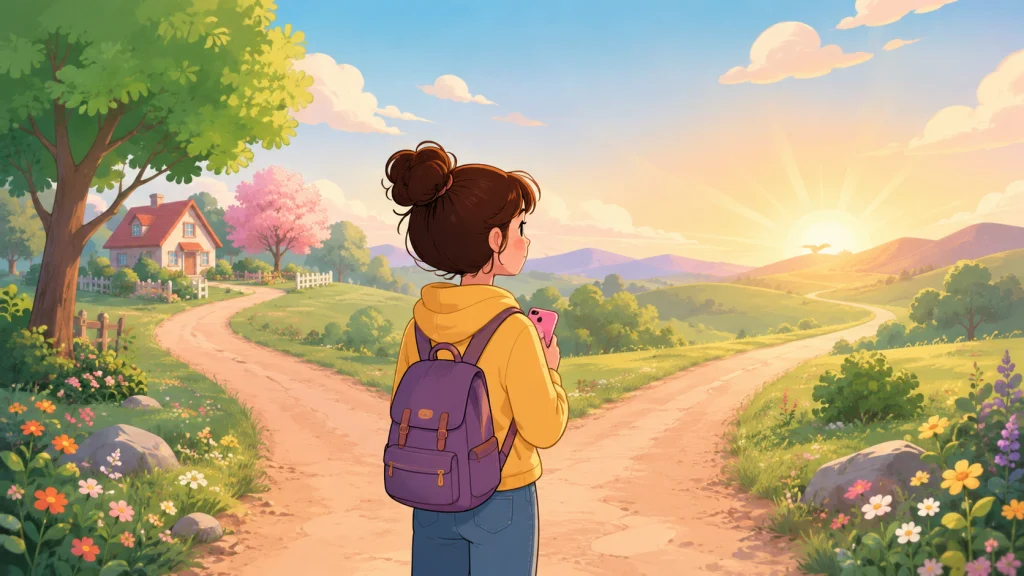
Wise words for hard decisions and crossroads moments
There’s a particular kind of stuck that happens when someone is standing between two real options, both with real costs, and no amount of making pro-and-con lists is going to make the answer obvious. I’ve watched people I care about spend months in that spot, and what helped, when anything helped, was never a message that told them what to choose. It was something that helped them stop treating the decision like a test they could fail.
What tends to make these moments worse is the belief that there’s a correct answer hiding somewhere, and the right amount of thinking will reveal it. Most real decisions aren’t like that. They’re more like two different lives, each with its own version of good and hard, and the work isn’t finding the right one. It’s choosing one and meaning it.
- Both choices can be good. The discomfort isn’t a sign you’re choosing wrong, it’s a sign the choice matters.
- You won’t get a guarantee either way, so the question isn’t which path is safe, it’s which one you can move forward in honestly.
- Sometimes the way you find out what you want is by imagining yourself having already chosen, and noticing how that feels.
- A decision you can explain later, even if it didn’t work out, is usually a decision you made for the right reasons.
- The fear of the wrong choice can be louder than either choice actually is.
- You’re not choosing for the rest of your life. You’re choosing for now, with the information you have now.
- If you’re waiting to feel completely sure, you might be waiting for something that was never going to come.
- Whichever way this goes, you’ll bring yourself with you. That’s more stable than it sounds.
That last point is worth sitting with for a moment, because it leads naturally into the broader themes underneath most of these moments: who someone is becoming, what they’re capable of carrying, and what they’re working toward.
Strength, change, purpose, and the slow work of growing
Underneath almost every situation that calls for words of wisdom, there’s one of a handful of bigger themes. Someone’s discovering they’re stronger than they thought, often in a moment they wish they didn’t have to be. Someone’s in the middle of a change they didn’t fully choose, or one they chose but underestimated. Someone’s quietly wondering whether what they’re doing with their time matters. Or someone’s just trying to become a slightly better version of who they already are, one ordinary day at a time, without much to show for it yet.
Each of those is its own kind of moment, and each one deserves more than a single line buried in a general list. Strength shows up differently in a crisis than it does in the slow grind of an ordinary hard month. Change feels different depending on whether someone chose it or it happened to them. Purpose rarely arrives as a lightning bolt. More often, it’s something someone notices only once they look back. And growth, real growth, almost never feels like growth while it’s happening. It just feels like Tuesday.
If one of those is closer to where you or someone you’re thinking of is right now, it’s worth going there directly rather than trying to make a general line do that kind of specific work.
Choose the angle that actually fits
Words of wisdom work best when they’re matched to the shape of what someone’s going through, not just the general category of “having a hard time.” A short line can carry someone through a rough afternoon. A line for a friend can give them something steady to hold without making them feel managed. A line about transitions can sit with someone for the length of an entire season. And a line about a crossroads can be the thing someone reads three times before they finally make the call they’ve been putting off. None of these will make a decision for anyone, or undo a hard season, or turn a difficult year into an easy one. What they can do is offer a different way of looking at it, for exactly as long as that’s useful, and then quietly get out of the way.
Go deeper into a specific kind of wisdom
Everything above is meant to work as a starting point, but most situations eventually point toward something more specific than a general list can offer. The collections below each take one of these themes and stay with it, with more words, more context for when each one fits, and more room to find the exact line that matches what someone’s actually going through.
| Collection | What you’ll find there |
|---|---|
| Words of wisdom worth sharing | A wider collection built for sharing as-is, organized for when you just want to send a good line without much context. |
| Messages about strength | For the moments when someone’s holding more than they’re showing, and needs to hear that it counts. |
| Messages about change | For change that’s already underway, whether someone chose it or didn’t. |
| Messages about finding your purpose | For the quieter question of whether what someone’s doing actually matters. |
| Wise words for someone at a crossroads | More for the specific weight of standing between two real options. |
| Growth mindset messages | For the slow, often invisible work of becoming a little more than who someone was last year. |
FAQs
💭 What’s the difference between words of wisdom and words of encouragement?
Encouragement is meant to lift someone’s mood in the moment. Words of wisdom are meant to shift how someone sees their situation. Both have their place, but they’re not interchangeable, and using one where the other is needed can fall flat.
📝 What are some short words of wisdom I can send in a text?
The best short ones name something specific about how people actually behave, like noticing that what someone’s avoiding is rarely as bad as the avoiding itself. A handful of options like that are listed above, ready to send as they are.
💛 What are good words of wisdom for a friend?
Good words of wisdom for a friend should sound personal, not preachy. Try to give them one steady sentence they can sit with, like reminding them that they don’t have to solve their whole life tonight, only the next honest thing in front of them.
🚪 What words of wisdom help with a big life change?
Look for lines that acknowledge the in-between feeling of a transition rather than rushing someone toward whatever’s next. Something that says it’s okay not to have the next chapter figured out yet tends to land better than anything that tries to wrap things up too neatly.
🤔 Is there wisdom that actually helps with a hard decision?
Yes, though it won’t tell someone which choice to make. The most useful words for a crossroads moment usually help someone stop treating the decision as a test they could fail, and start treating it as a choice they can make and stand behind.
🌱 Where can I find words of wisdom about a specific theme, like strength or purpose?
Each of those themes has its own collection built specifically around it, since a single general line rarely does justice to something like strength, change, purpose, or growth on its own.