Messaging has replaced phone calls for most of what we communicate day to day, and for most of it, that shift is fine. But some moments need a voice, and reaching for a text instead is not always the efficient choice. Sometimes it is the easier one, and those two things are not the same. What follows is a clear way to tell the difference, so the way you reach out actually matches what you are trying to say.
Why We Stopped Calling
The question of when to text vs call has a cleaner answer than most etiquette advice suggests, but getting there requires being honest about something first. According to YouGov data from 2026, messaging has replaced phone calls for 68% of Americans. Among Millennials, 75% actively avoid making calls. And 81% of people report some form of anxiety around phone calls, either making them or receiving them. That is not a fringe statistic. That is most of us.
This shift happened for real reasons. Text is faster, less intrusive, and leaves a record you can return to later. It lets you respond on your own time, removes the awkward pause, and does not require you to be verbally coherent on the spot. I will not pretend I have not been grateful for every one of those advantages. But there is a version of this preference that crosses from efficiency into something else entirely. Choosing text because the stakes feel lower is not always the practical choice. Sometimes it is avoidance dressed up as convenience, and knowing which is which matters more than most people realize.
When a Text Is Exactly the Right Choice
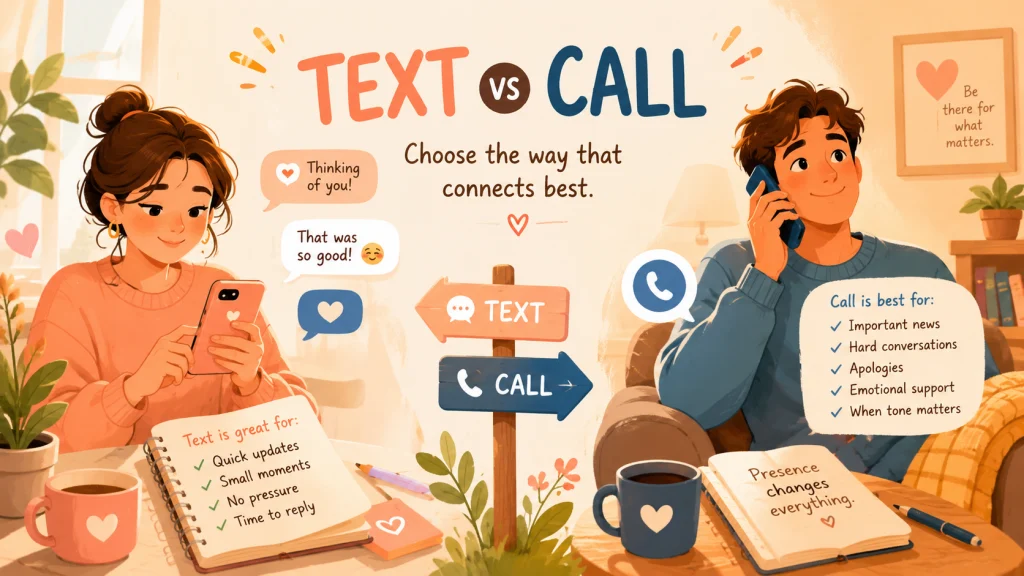
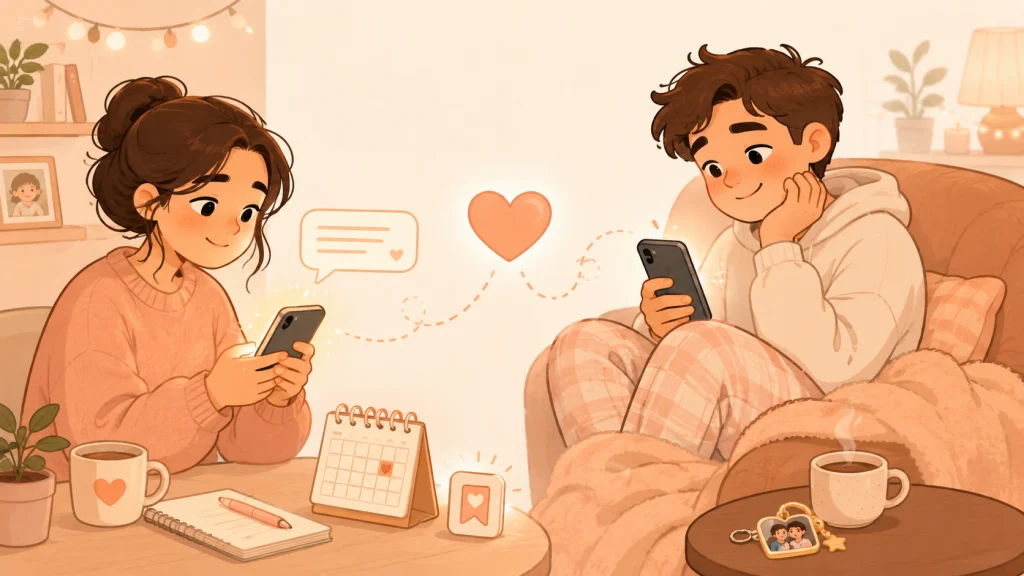
Text works beautifully in the right situations, and the mistake most people make is assuming those situations are narrower than they are. A quick update that does not need an immediate response. A message that says you are thinking of someone without demanding anything back. Something that will make a person laugh. Checking in without requiring them to be emotionally available right now. All of that belongs in a message, not a call.
There is a particular kind of text I have come to value more than almost anything else in a friendship: the one that says something small, something specific, and asks for nothing. “I passed that restaurant we always said we would try and finally went. You were right about the pasta.” Does that need to be a phone call? It does not. As a call, it would actually feel heavier than it needs to. Short, warm, precise, and over in ten seconds is sometimes exactly the right amount. The situations where text earns its place are not just acceptable, they are often ideal.
Text is also the format that gives the other person time. They can re-read it. They can sit with it. They can respond when they are ready, not when you are standing there waiting. That is not a limitation of the format. For the right moment, it is its greatest strength.
- Quick updates and low-stakes check-ins with no agenda attached
- Thinking-of-you messages that ask for nothing back
- Sharing something specific and personal (“this made me think of you immediately”)
- Sending something the other person can re-read, save, or come back to later
- Following up weeks after something hard, when everyone else has already gone quiet
That last one is worth pausing on. A message sent weeks after a loss, when the first wave of support has gone quiet and the person is still carrying it alone, often lands harder than anything sent in the first few days. The timing changes what the same words communicate entirely. The medium is not the problem. What it carries, and when it arrives, is what matters.
When a Call Is the Only Honest Answer
Some content carries too much weight for text. Words on a screen arrive without tone, without breath, without the pause that tells someone you are sitting with the weight of what you are about to say. The reader fills in what the medium leaves out. In emotionally heavy moments, what they fill in is rarely generous, and almost never what you intended.
Tell someone a parent has died in a text message and they are alone with it the moment they finish reading. Apologize for something that genuinely hurt someone and they have no way to know whether you sat with it for an hour or typed it in thirty seconds and hit send. Deliver a diagnosis, a breakup, or a serious loss through a screen and the silence that follows belongs only to them, without you in it. These are not edge cases. They happen in real relationships, and when a text goes wrong in a moment like this, it is rarely only the words that failed. It is the absence of a voice beside them.
| Situation | Text or Call | Why |
|---|---|---|
| Quick update, thinking of you | Text | Low stakes, no immediate response needed |
| Sharing something funny or specific | Text | Short, warm, exactly right for the moment |
| Following up weeks after something hard | Text | Non-intrusive, can be re-read privately |
| Delivering serious news (death, diagnosis) | Call | The silence that follows needs to be witnessed |
| Apologizing for something significant | Call | Tone carries what words on a screen cannot |
| Supporting someone in active crisis | Call | Real-time presence is what the moment requires |
| Something too raw to say out loud | Text | Written words give both people time to absorb |
The rule underneath all of this is simpler than it sounds: the heavier the content, the more of yourself the moment needs. Text is the lowest-bandwidth format. It carries information, but it strips nearly everything else. Voice adds tone. In-person adds presence. Choosing the right one is not about etiquette so much as it is about showing up in proportion to what you are asking the other person to receive.
What the Medium Says Before You Type a Single Word
There is a reason a condolence text can feel thin even when the words are carefully chosen. Without vocal tone, written condolences can read as obligatory. The person receiving them cannot tell whether you paused before you typed, whether you put your phone down and came back, whether you searched for the right phrase for twenty minutes or typed something quickly and moved on. The medium erases that quiet effort, and sometimes that effort is what the person most needed to feel. If you are looking for sympathy messages that feel personal rather than reflexive, the words matter, but so does the sense of where they came from.
Effort signals care. An unexpected call, even a short one, says something before the first word is spoken: I stopped what I was doing because I wanted to hear your voice. A text is efficient. A call is an interruption on purpose, and an interruption on purpose is a choice. The difference is felt, even when it is never named. For apologies especially, the format itself communicates how much weight you gave the moment. I have sent apology texts I thought were careful and thorough, and they landed wrong, not because the words were inadequate but because the other person had no way to feel me in them. A call, even a clumsy one, would have carried more. The best love messages for when the words feel impossible to say understand this: the form of the message is already part of what it communicates.
The Approach That Takes the Pressure Off Both of You
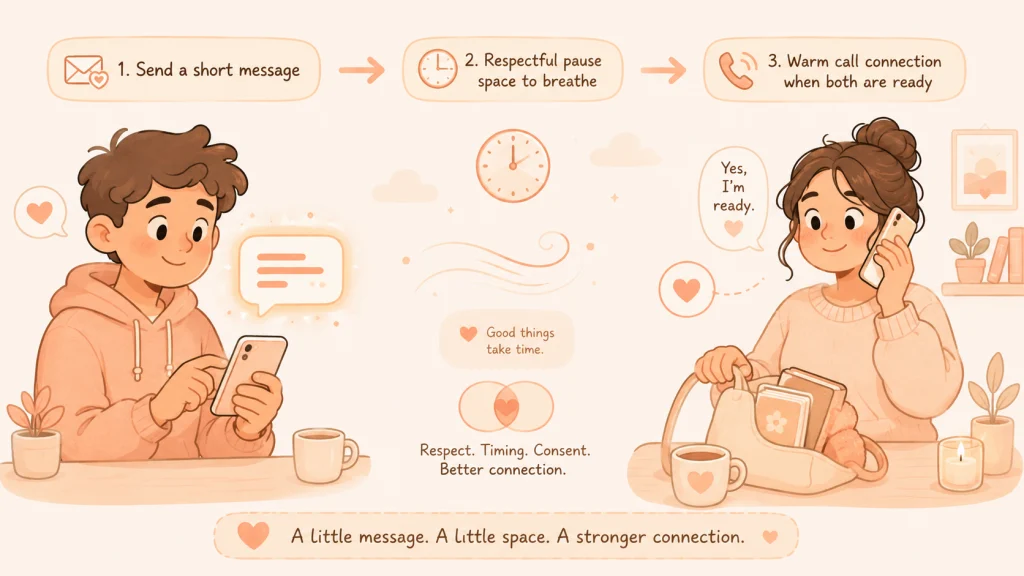
The most practical thing I have found, for situations that sit somewhere between a text and a call, is to send a short message first. Not the full content, just an arrival signal: “I have been thinking about you. Are you around for a call sometime this week?” Or, even simpler: “I want to talk. Just making sure the timing works for you.” This is not hedging. It is considerate. An unexpected call creates an immediate demand: be present, be coherent, be emotionally available right now, regardless of where you are or what is happening around you. A short message first gives the other person a moment to arrive before you do.
Phone call etiquette in 2026 has shifted in exactly this direction, and what used to read as tentative now reads as respectful. The people I know who are consistently good at staying close across distance, across long silences, across the awkward gap of not having spoken in months, are almost never the ones who just call without warning. They are the ones who announce themselves first. The call lands differently when the other person has had sixty seconds to put down what they were carrying and actually be there.
When Writing Is the More Courageous Option
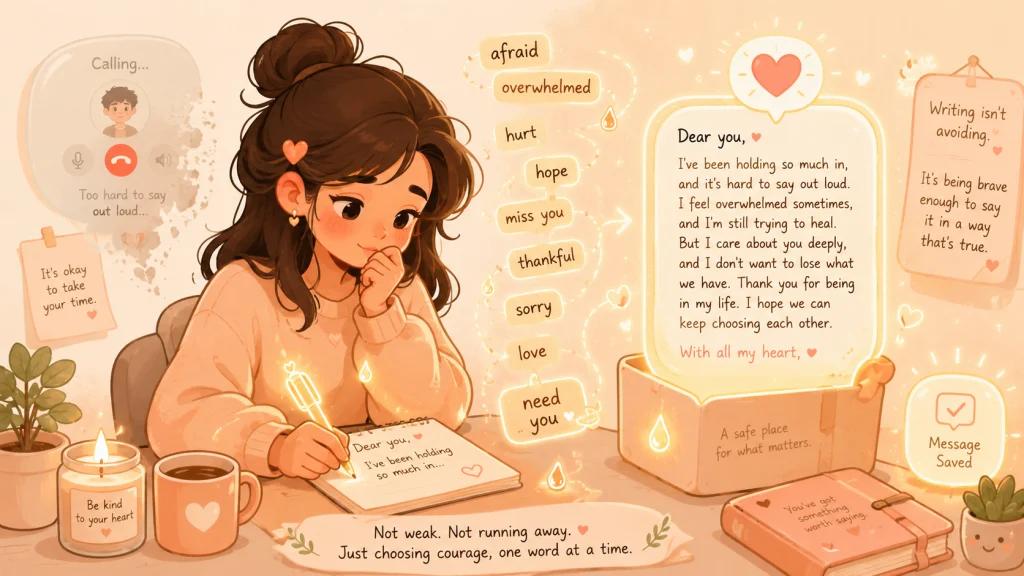
There is one situation where choosing text is not avoidance at all. It is the opposite. For things that are genuinely too raw to say out loud, a written message gives both people time. The person writing it can find the words without losing them to nerves. The person receiving it can absorb it privately, without having to hold their face together while someone watches. Some things, said out loud in real time, collapse before they finish: the voice breaks, the thought gets lost, the emotion takes over the room before the point even arrives. Writing gives the feeling somewhere to land that holds it still. For those moments, the words of comfort that hold up when someone is grieving were written with exactly this in mind: that the right words, written down, can do something a conversation sometimes cannot.
There are things I have put in messages that I could not have said out loud, and I meant them more, not less, for having written them. The deliberateness of choosing each word, the ability to revise before sending, the fact that someone can return to it at two in the morning when they need it most and the words are still there waiting. These are not weaknesses of the written format. They are what it does that nothing else can. The place to start, when a relationship needs something more than a quick message but more considered than a call, is the kind of relationship messages that carry the weight of what you actually mean.
Final Thoughts: The Medium You Choose Is Already Part of the Message
No framework will cover every situation. You know the relationship. You know what the moment is asking. But the logic underneath the decision is simpler than it usually feels: the heavier the content, the more of yourself you need to bring to it. If what you have to say is light, a message is often exactly right. If what you have to say is heavy, your voice may be what the moment is asking for. And if you genuinely cannot tell, a short message asking whether they are available to talk is not indecision. It is respect. It says: I wanted to reach you, and I also wanted to make sure you were ready to be reached.
The question underneath “should I text or call” is almost always the same question: am I reaching out in a way that actually honors what I am trying to say? Most of the time, the answer is already there. You just have to be willing to hear it.
FAQs
📱 Is it okay to send condolences by text?
For close relationships, a call or handwritten card is more fitting, but a text is far better than silence. If you are geographically far, or the relationship is less close, a warm and specific text is entirely appropriate. What matters most is that you reach out in a way that feels sincere, not automatic.
📞 When should you call instead of sending a message?
Call when the content is heavy: serious news, a significant apology, someone in active distress, anything that requires real-time presence. Text works when the moment is lighter or when the other person needs time to absorb rather than respond on the spot. Emotional weight is the deciding factor.
💬 Is it rude to apologize over text?
For small things, a text apology is fine. For anything that genuinely hurt someone, a text can read as avoidance. The medium signals how much effort you put in, and effort signals how much the relationship matters to you. If the apology is serious, a call says something that a text simply cannot.
🤔 Why do most people prefer texting to calling now?
Partly efficiency, partly anxiety. YouGov data from 2026 shows 81% of people experience some anxiety around phone calls. Texting is lower pressure, leaves a record, and does not demand an immediate response. For most everyday communication, it fits the rhythm of real life better than a call does.
✍️ Can a text ever be more meaningful than a call?
Yes. For things that are too complicated or raw to say out loud, a written message lets you find the right words without losing them to nerves. It can also be re-read later, which a call cannot. Writing is not always the easier choice. Sometimes it is the more deliberate one.