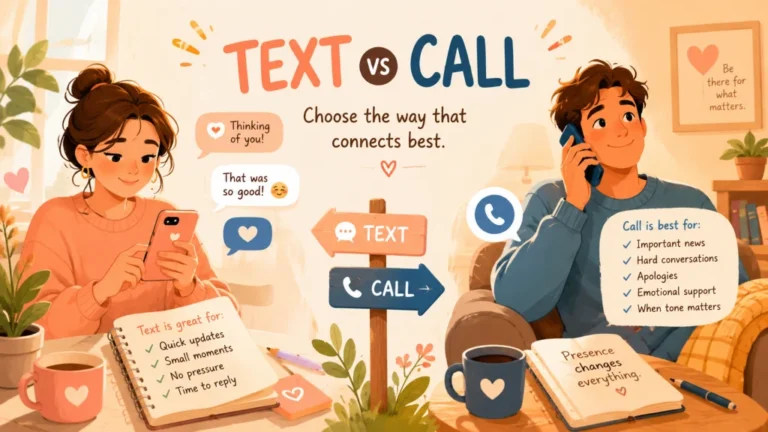
The question of whether it is OK to text condolences tends to arrive in a specific moment: you have just heard the news, your phone is in your hand, and something small is telling you that a text is not serious enough for a loss this heavy. The honest answer is that the channel matters less than most people assume. What grieving people often remember is who reached out and what they said, not which format the message arrived in. This covers when a text is genuinely the right choice, when it needs to be followed by something more, and the one quality that separates a condolence text that disappears from one that gets read more than once.
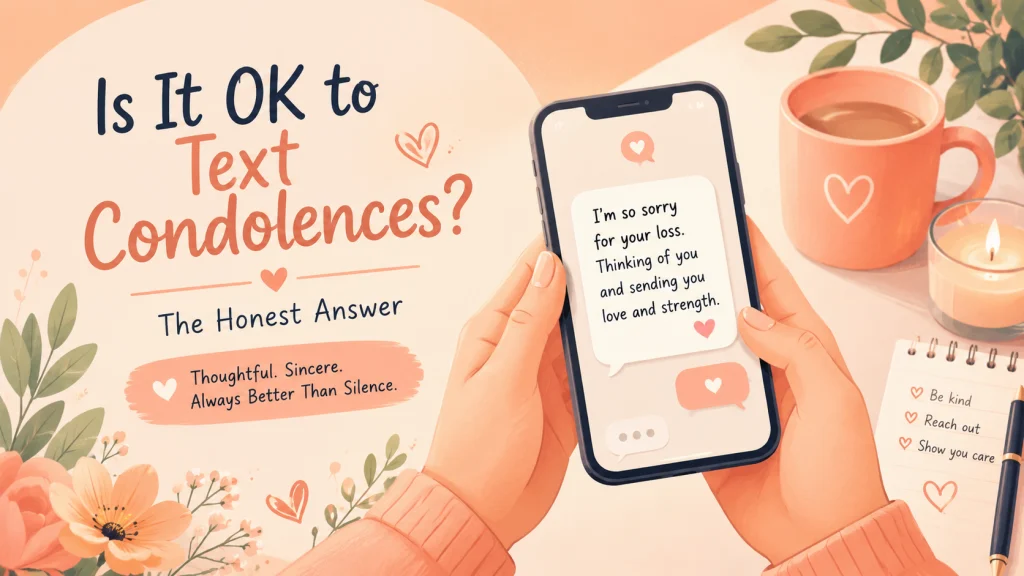
Is It OK to Text Condolences? The Honest Answer
Someone you know just lost their mother. You want to say something. But you are staring at your phone instead of reaching for a card, and a quiet voice is telling you that a text is not serious enough for a moment this heavy. If you have been wondering whether it is OK to text condolences, you are not alone in asking, and the answer is less complicated than it feels.
A generation ago, condolences required physical presence: showing up at the house, bringing food, sitting in silence while someone cried. Digital communication changed that equation. It made reach infinite. You can now send a message to someone grieving on the other side of the world within minutes of hearing the news. But it also stripped away the body language, the shared meal, the simple act of being in the same room. So the question of texting condolences is really a question about what presence actually means, and what it means depends heavily on the relationship and the moment.
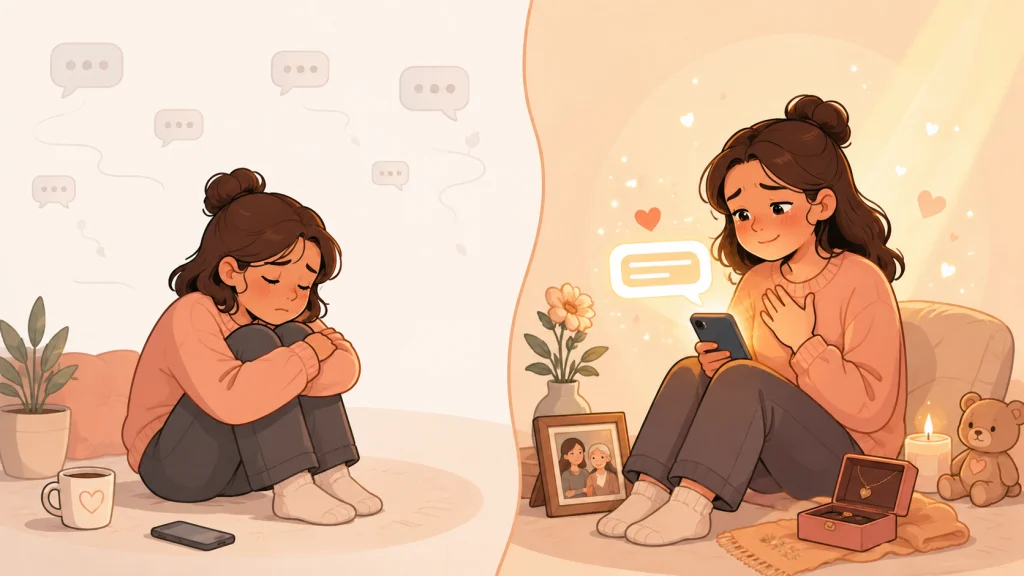
What the Grieving Actually Remember
When someone is grieving, the most painful response is often silence. Not a clumsy text. Not a card that arrives a week late. Silence. The people who say nothing, who wait until they find the perfect words, who decide the moment has passed, are often noticed most by their absence.
APA research by Liu, Rim, and Min suggests that what matters to the recipient is the act of reaching out itself, and that surprise and specificity can amplify that impact regardless of the medium. A heartfelt text from someone the grieving person did not expect to hear from can carry more weight than a card from someone who sent one because etiquette required it. The channel is not usually what makes a condolence land. The sincerity does.
I have been on the receiving end of this, from places far enough away that a visit was not possible. A message that said something specific about the person I had lost, that named a detail I had almost forgotten, did something a perfunctory phone call could not. What I remember is not that it arrived by text. I remember that it arrived at all, and that the person who sent it had actually thought about me.
When a Text Condolence Is the Right Call
There are situations where a text is not just acceptable. It is genuinely the best option available. The relationship and the timing shape everything.
- Acquaintances and colleagues you are not close to. A coworker who lost a parent, a neighbor you wave to but rarely speak with, a former classmate you reconnected with online. The relationship does not call for a phone call or a visit, and an unexpected card can feel more formal than warm. A brief, genuine text is appropriate and often exactly right.
- People who are geographically far. When a visit or a timely card is not possible, a text is the bridge. The alternative is waiting, and waiting is how silence happens.
- A follow-up message weeks later, when everyone else has gone quiet. This is the moment most people miss. The first week after a loss is full of calls and cards. By week three, the world has moved on and the grieving person is alone with it. A simple text at that point, something like “I have been thinking about you, no need to reply,” can carry more weight than anything sent in the immediate aftermath.
- A first contact before calling. For close relationships where you plan to call, a text sent first gives the person a moment to prepare. Grief does not always want to answer the phone. The text says you are there. The call can happen when they are ready.
Etiquette guidance from Reader’s Digest in 2026 says that texting condolences can be appropriate in both casual and personal situations when the emotional weight of the message matches the relationship. That last part matters. A text to a close friend who just lost a parent is a beginning, not the full response.
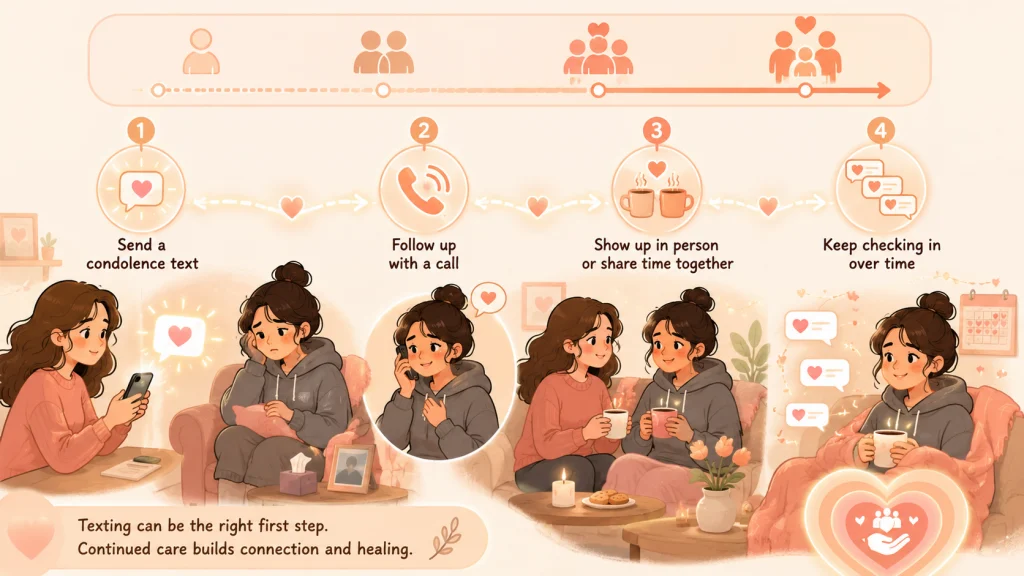
When a Text Is Not Enough on Its Own
There are relationships where a text condolence, sent alone, will feel thin. Not because texting is inadequate in itself, but because the relationship has established a different standard of care, and falling below it is noticed.
Close friends, immediate family members, and people you speak with regularly are in this category. A text to your best friend the morning she loses her father is not wrong. It is probably the fastest way to say “I am here” before you can get to her physically. But it should not be the last thing you do. It should be the first.
| Situation | Text condolence | What to add |
|---|---|---|
| Acquaintance or colleague | Usually sufficient on its own | Nothing required; keep it brief and genuine |
| Distant friend or extended family | A good starting point | A card or a follow-up message later adds weight |
| Close friend | A first contact, not the whole response | Follow with a call, a visit, or sustained presence over weeks |
| Immediate family | Send it, but do not stop there | Physical presence when possible; repeated check-ins over time |
| Someone grieving at a distance, no visit possible | Fully appropriate and often the only option | Consistent follow-up messages in the weeks that follow |
The pattern I keep seeing is that people use “I sent a text” as a reason to stop, when the text was only ever meant to be the opening line. If the relationship calls for more, the text earns its place by being the first thing you did, not the only thing.
The One Thing a Condolence Text Must Never Be
If there is a single quality that separates a condolence message that lands from one that disappears, regardless of whether it arrives by text, card, or phone call, it is specificity.
The worst condolence message in any format is the one that could have been sent to anyone. “Thinking of you during this difficult time.” “So sorry for your loss.” These are not wrong exactly. But they are easy to read as templates, and the person receiving them can feel that. They process it as a social obligation completed, not as a moment of genuine contact.
There is a text I almost did not send once, because I was not sure I had the right words. I wrote something short that named the specific person who had died, one thing I remembered about her from the only time I had met her, and said I was sorry. Nothing profound. The person who received it told me later it was one of the few messages that did not feel like a form. That one detail, that single specific thing, was the entire difference.
If you are looking for the right words for a condolence text, the sympathy messages on this site are written with this in mind: specific enough to feel real, adaptable enough to fit the relationship you actually have. The goal is never to hand you a script. It is to give you a structure honest enough to build something real from.
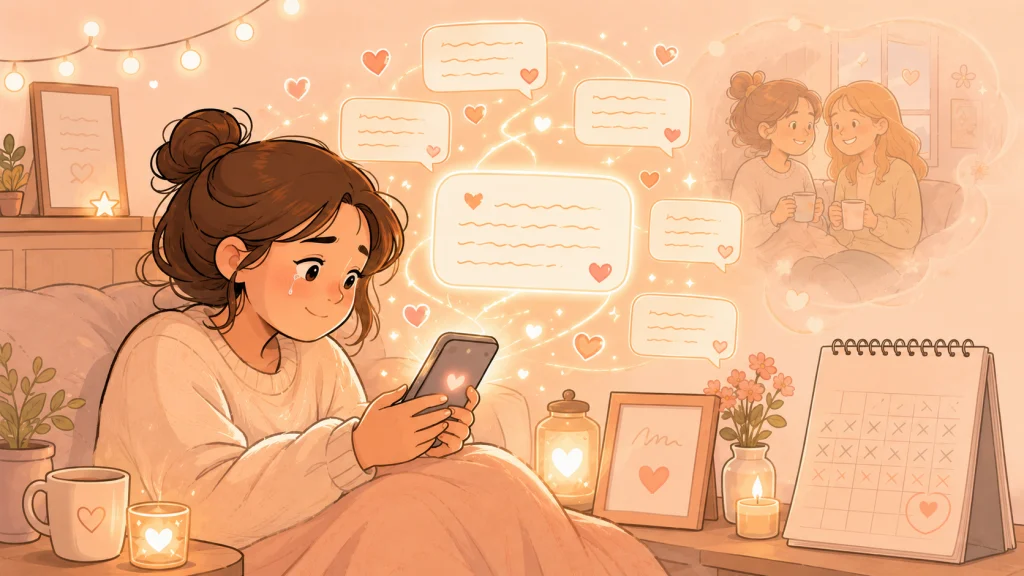
Why Written Words Outlast the Visit
There is something about a written condolence that a spoken one, however warm, cannot replicate: it can be returned to.
Grief is not a single event that happens in the first week and then resolves. It moves in and out for months and years. The middle of a sleepless night, three months after the loss, is not a moment when a friend can be called. But a meaningful text, still sitting in the phone, can be opened. Research from Calm, published in 2025, reflects what many grieving people already know: emotional words that arrive in writing can have a durability that in-person conversations cannot match. The words stay when the visit has ended and everyone has gone home.
This is part of why the late message, sent weeks after the loss, so often means more than the immediate one. It arrives when the silence has settled in. It says: I have not forgotten. That is sometimes the most important thing a message can do. For situations like this, words of comfort can help you find what to say when you are not sure how to re-open the conversation after time has passed.
And if someone in your life is grieving in a way that has moved beyond loss into something heavier, the kind of ongoing weight that comes from feeling forgotten, encouragement messages offer a different kind of reach. Not condolence exactly, but presence. A reminder that someone is still paying attention.
Final Thoughts: Send the Text
The answer to whether it is OK to text condolences is almost always yes. Not because a text is sufficient in every case, but because saying nothing is almost never the right call, and a text is what you have in your hand right now.
The question worth sitting with is not whether to send it. It is whether it says something real, or whether it could have been sent to anyone about any loss. The format is the easy part. The specificity is where it gets harder, and where it starts to matter.
Send the text. Make it specific. And if the relationship asks for more than that, keep going.
FAQs
💬 Is texting condolences disrespectful?
Not by itself. The channel is not what makes a condolence respectful or dismissive. A generic text can feel hollow; a genuine, specific one can feel like the most meaningful thing someone sends. What matters most is what you actually say, not how it arrives.
📱 Can I express condolences by text instead of calling?
Yes, and sometimes it is the better option. Grief does not always want to answer the phone, especially in the first few days. A text gives the person space to receive your message without having to respond in real time. If you are close to them, follow up with a call when they are ready for it.
✉️ Should I send a card as well as a text?
For close relationships, a card adds something a text cannot: it is physical, it takes visible effort, and it often arrives after the initial flood of messages has slowed. For acquaintances or distant contacts, a genuine text is usually enough on its own.
🕰️ Is it too late to text condolences?
No. A message sent weeks or even months after a loss can mean more than one sent immediately. The early days are full of contact. Later, when everyone else has moved on, a simple “I have been thinking about you” can be the most welcome thing in someone’s phone.
🤔 What should a condolence text actually say?
Say something specific. Name the person who died if you knew them, or name something you know about them through the person you are writing to. The more it sounds like it could only have been sent to this person, about this loss, the more it will land.
🌐 Is it OK to send condolences digitally if I live far away?
Completely. Distance is one of the clearest cases where a text or digital message is not a lesser choice but often the only real one. The APA research on reaching out is consistent: the act of contact matters more than the medium it travels through.