These 65 messages are sorted by the kind of fight you actually had, because a snappy exchange needs a different message than one where you both escalated and neither of you meant to. They are for bickering, for the argument that started over something small and lasted longer than it should have, for the silence afterward where someone has to go first. None of them are for serious mistakes, and I will explain why that distinction matters before you get to the list. If you want to be the one who breaks the tension, one of these will get you there. For broader context, see sorry messages after a fight.
Not Every Fight Needs a Long Explanation
There is a version of the sorry message after a fight that a lot of people write, and it tends to be too long. It re-litigates what happened, explains their own position again, makes a point of mentioning what the other person did wrong even while saying sorry. I have written that version too. It does not usually land the way you hope, because what it is really doing is continuing the argument in a calmer font. For related message ideas, see what to text after a fight.
These messages work best when they are short, when they acknowledge what happened without turning it into a second conversation, and when they make it clear that you want the silence to end more than you want to be right. That is the standard all 65 of these are trying to meet. Not theater. Not a paragraph that takes fifteen minutes to compose and three readings to understand. Just something honest that opens the door.
A note on where these fit: if what happened was serious, a text is probably not enough on its own, and this is not the list for that. These are for the bickering kind of fight, the kind where you both probably know it was mostly nothing, even if it felt like something in the moment. For the harder conversations, the ones where real damage was done, messages that acknowledge deeper hurt might be closer to what you need.

The Difference Between Bickering and Something Bigger
Most collections of apology texts bundle everything together: the snappy exchange after a long day, the blow-up that came from real resentment, the moment where something was said that cannot be unsaid. They treat these as the same category of event requiring the same kind of message. They are not, and sending the wrong type can actually make things worse.
A light, warm apology after genuine bickering can feel like a relief. The same message after something serious can feel like you are minimizing what happened, which tends to restart the argument rather than close it. Before you pick a message from any list, it helps to be honest with yourself about which kind of fight this actually was.
| The bickering fight | When it is something more serious |
|---|---|
| Started over something small or nothing at all | Involves a real breach of trust or a recurring issue |
| Escalated in the moment, but neither person actually meant it | Something was said or done that has lasting weight |
| Both people are probably over it by morning | A text alone is unlikely to be enough |
| A short, honest message can genuinely close it | The message needs to lead somewhere, not just arrive |
If this was the bickering kind, you are in the right place. The messages below are organized around what specifically happened, because “we fought” covers a lot of ground and the right message depends on the details. Start with the section that most closely matches your situation.
For the Fight That Was Mostly About Nothing
This is the category most people are actually in when they go looking for a sorry message after a fight. The argument started over something small, maybe over who forgot to do something, or a comment that landed wrong, or just the accumulation of a tired day coming out sideways. It became a thing and now it feels weird, and you want it to stop feeling weird.
What these messages do is acknowledge the friction without making it bigger than it was. They are not grand apologies. They are not full confessions. They are just someone saying: I know that happened, I would rather it did not, and I am ready to move past it whenever you are. That is usually enough.
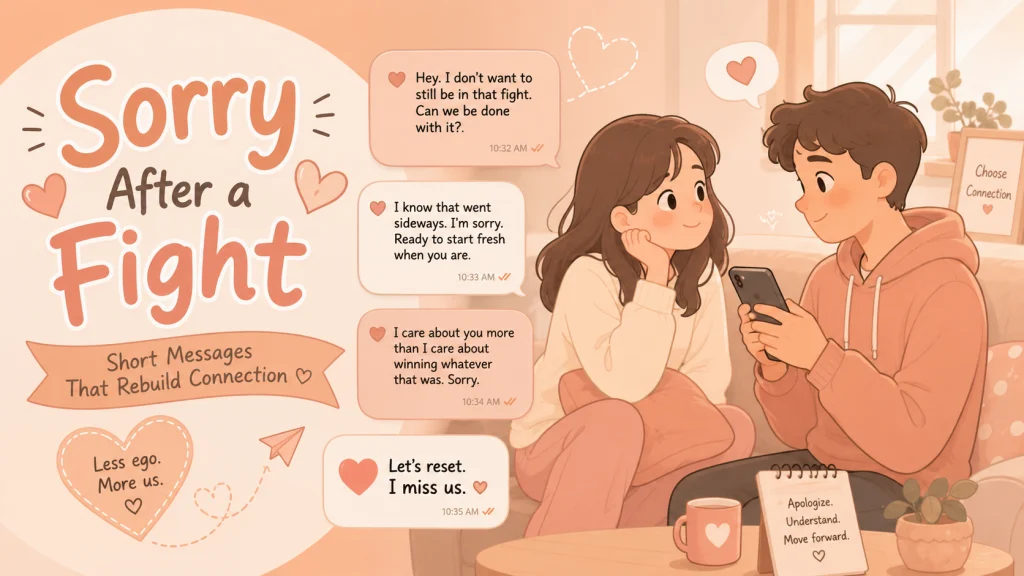
- “Hey. I don’t want to still be in that fight. Can we be done with it?”
- “I know that went sideways. I’m sorry. Ready to start fresh when you are.”
- “That got bigger than it needed to. I’m sorry for my part in it.”
- “I’m done being annoyed. I’d rather just be with you.”
- “I don’t even remember exactly how that started. I just know I don’t want it to keep going.”
- “Sorry for earlier. I was in my head and I took it out on the wrong person.”
- “I’m not mad anymore. Are you? Because if you’re not, I’d love to just move on.”
- “That wasn’t about what we said it was about, was it. I’m sorry. Let’s reset.”
- “I think we both just had a lot going on today. I’m sorry the fight ended up between us.”
- “I care about you more than I care about winning whatever that was. Sorry.”
- “That felt dumb as soon as it was over. I’m sorry it went that far.”
- “I’d rather apologize and move on than be right and still feel like this. Sorry.”
The best thing about messages like these is how little they ask of the other person. There is no accusation buried in the apology, no implied “but you also…” They leave room for the other person to come back without having to defend themselves first, which is usually the fastest way out of the tension.
For When You Were Snappy and Want to Acknowledge It
Sometimes the fight was not really mutual. You were short with them. You said something with more edge than it deserved. You snapped when they did not deserve it. And now you are on the other side of it, aware of exactly what you did, and looking for something that says sorry without over-explaining why it happened.
In my experience, the messages that work here are ones that own it cleanly. Not “I’m sorry if I seemed snappy” (which is not really an apology) and not a three-paragraph explanation of your stress levels. Just: I was sharp, I did not need to be, I am sorry. That is usually all the other person needs to hear, and saying it directly tends to land faster than anything else.
- “I was short with you earlier and you didn’t deserve that. I’m sorry.”
- “That snap wasn’t about you. But it landed on you, and that’s not fair. Sorry.”
- “I’ve been carrying something all day and I took it out in the wrong direction. I’m sorry.”
- “You didn’t do anything wrong. I was irritable and I made it your problem. I’m sorry.”
- “I owe you an apology. I was in a mood and I let it come out at you.”
- “I know I was short. I’m not trying to make excuses for it. I just want you to know I know.”
- “That was me being stressed and handling it badly. Not anything about you. I’m sorry.”
- “I heard myself being snappy and didn’t stop it soon enough. That’s on me. Sorry.”
- “I’m sorry. You didn’t come at me and I didn’t give you the version of me you deserved.”
- “I was tense and I aimed it at you. That wasn’t okay. I’m sorry.”
There is something about naming the specific thing you did, rather than giving a general apology, that tends to make these land better. The other person already knows you were snappy. Hearing you name it means they do not have to explain how it felt, and that saves everyone a step.

For When You Both Said Things You Didn’t Mean
This is the category where neither person is entirely without fault, and both people probably know it. You said something. They said something. It escalated. No one was at their best and now there is a particular kind of silence that comes from two people waiting for the other to move first, each one hoping the other blinks.
The thing with these messages is that they cannot sound like “I’m apologizing so you will apologize back.” They need to be genuine in the direction they go, even if you quietly hope something comes back the other way. A message that reads as transactional tends to feel like more of the fight, just in a calmer register.
- “I said some things in that fight I wish I hadn’t. I’m sorry for my part of it.”
- “I know we both got heated. I don’t want to stay in it. I’m sorry.”
- “I’m not bringing the whole fight back up. I just want you to know I’m sorry for what I said.”
- “We both went a little too far. I’m owning my side of that. I’m sorry.”
- “That got away from both of us. I’m sorry for where I took it.”
- “I don’t want to talk about the fight. I just want you to know I’m sorry.”
- “I think we were both just tired. But I still shouldn’t have said what I said. I’m sorry.”
- “I’m not keeping score. I’m just sorry it happened and I’m ready to let it go.”
- “I didn’t handle that well. I know you probably didn’t mean everything either. But this is just my apology.”
- “We’ll talk when we’re ready. I just wanted to say I’m sorry first.”
That last one is worth sitting with for a moment. Sometimes the most useful thing a message can do is say “I am not waiting for you to go first” without demanding the other person respond right away. It breaks the stalemate without creating pressure, and in a mutual fight, that tends to be exactly the kind of opening both people were waiting for someone to make.
Breaking the Silence: The First Message After the Fight
There is a specific kind of silence that settles after a fight, where the fight is technically over but nothing has been said yet and the absence of words has its own weight. This is the hardest moment to write for, because the message has to do two things at once: acknowledge the tension without reopening it, and offer a way back without making the other person feel like they need to respond immediately.
I sent a message like this once after a fight that had gone quiet for most of a day. I kept rewriting it trying to say too much. The version that finally went out was three sentences. The response came within minutes. Not because three sentences was magic, but because it said what it needed to say without becoming another conversation the other person had to manage.
- “Hey. I miss you. Can we be okay?”
- “I don’t want today to end like this.”
- “I’ve been quiet because I didn’t know what to say. I still don’t, completely. But I’m sorry and I miss you.”
- “I’m done being in the fight. I’d rather be with you.”
- “Thinking about you. Not about the fight. Just you.”
- “I hate when it goes quiet like this. I just wanted you to know I’m still here.”
- “I don’t want to fix it over text. I just wanted to break the silence first.”
- “Sorry for the fight. Ready when you are to talk or not talk, whatever you need.”
- “I keep wanting to say something and not knowing how to start. So: hi. I’m sorry.”
- “The fight is done. You’re still my person. That hasn’t changed.”
These messages share something: they are reaching out, not retreating. They are not waiting to see if the other person apologizes first. That small act of going first is sometimes what the other person was quietly hoping someone would do. And these messages are just the opening. If you are thinking about what comes next once the door is open, making up after a fight covers that territory more fully.

Funny but Sincere: For Relationships Where Humor Is the Way Back
Not every relationship handles a minor fight the same way. In some relationships, a sincere apology text is exactly right. In others, the most natural way to break the tension is to say something that makes the other person laugh, because that is how you two have always moved through things. If that is your relationship, forcing a solemn message into it can feel stiff and strange when something lighter would have landed like a relief.
The messages below are still genuine apologies. The humor does not replace the accountability, it just carries it differently. There is a real difference between making a joke to avoid saying sorry and saying sorry through the vocabulary that actually works between the two of you. These are the second kind, and the people who need them will recognize them immediately.
- “I’m sorry. You were right. I was annoying. [This message will self-destruct.]”
- “We’re dumb. I love you. Can we eat something?”
- “I have reviewed the facts and have concluded that I was wrong. Counsel has advised me to apologize immediately.”
- “I missed you approximately 12 minutes into being mad at you. I just didn’t want to admit it.”
- “I’m sorry. I was crabby and it wasn’t your fault. Also I’m hungry, which did not help.”
- “Can we pretend the last two hours didn’t happen? I’ll go first: hi, I’m very sorry and I would like to start over.”
- “We can fight about this properly after we’ve both eaten. Right now I’m just sorry.”
- “I’ve been practicing my apology and it is genuinely very good. But the summary is: I was wrong, you’re great, I’m sorry.”
Use your judgment on these. If humor is genuinely the way back for you two, one of those will feel like relief to both of you. If the fight was bigger than it seems or emotions are still running high, give it more time before you go this direction. The tone of the message has to match where the other person actually is, not just where you are.
When It Went on Longer Than It Should Have
Sometimes a bickering fight is not a single exchange. It drags. It gets set aside and then picked back up. It restarts over something adjacent. By the time it is over, both people are tired of it, but there is now this accumulated weight of hours sitting between you, and a message that only addresses the original topic feels like it is missing something.
Messages for this version need to acknowledge the time, not just the content. “I’m sorry for what I said” is accurate but incomplete if the thing that actually needs naming is how long this has been sitting here between you. These messages try to do both at once, which is what makes them feel more honest than a generic apology.
- “I’m sorry this went on so long. I’m more sorry for that than for whatever it started over.”
- “We’ve spent too much time on this. I don’t want to spend any more. I’m sorry.”
- “I don’t even fully remember what we were fighting about. I just know I’m tired of it and I want to be okay again.”
- “Every hour this has gone on I’ve felt worse about it. I should have said sorry sooner. I’m saying it now.”
- “I’m sorry. I think we both just dug in and now here we are. Can we just call it?”
- “It has been too long. I’m sorry for my part, and I’m sorry I didn’t say it before now.”
- “I wish I’d said this hours ago. I’m sorry.”
- “We’re better than this fight has been. I’m sorry it took me this long to reach out.”
These tend to work because they name the thing both people are already aware of: not just that you fought, but that you both let it sit longer than it needed to. That kind of honesty, offered without blame, tends to open things up faster than anything else. There is nothing left to defend when the other person has already acknowledged the whole picture.
Short and Simple: When You Just Want It to Be Over
Sometimes you do not need a message that does a lot of explaining. You just need something that says: I am sorry, I want to move on, that is all. The relationship is solid enough that a small gesture opens the door back up. The other person will get it. You do not need to say more than you mean, and often saying more than you mean is what makes the message land wrong.
These are also useful when you are not totally sure what to say but you know you want to say something. A short, genuine message is almost always better than no message, and usually better than a long message that second-guesses itself all the way through and arrives sounding uncertain about itself.
- “Sorry. I love you.”
- “I’m sorry about earlier.”
- “That was dumb. I’m sorry.”
- “Can we be okay?”
- “Sorry. Ready when you are.”
- “I miss you already. I’m sorry.”
- “Peace?”
Short does not mean less sincere. In a lot of cases, the person on the other end of “sorry. I love you” knows exactly what it means, and that simplicity is its own kind of relief. A message does not have to be long to carry weight. It just has to be honest and it has to arrive.
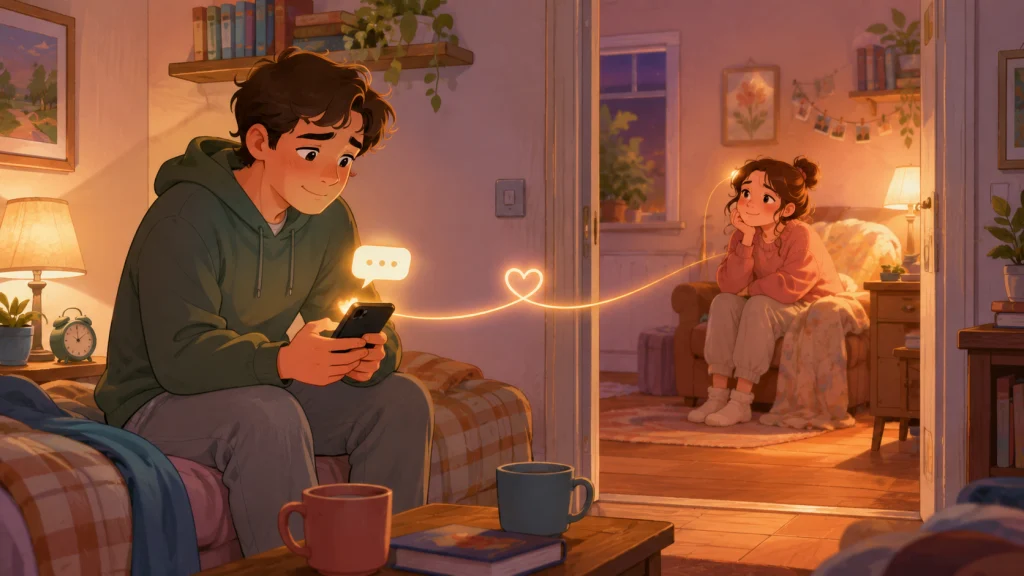
Final Thoughts: Go First
The hardest thing about the silence after a fight is that both people are usually waiting. Waiting for the other person to move, to soften, to say something that makes it okay to respond. The problem is that both people are doing this at the same time, and so nothing moves, and the silence takes on a weight neither of them intended.
Going first does not mean you were wrong, or more wrong, or that you are accepting full fault for the whole thing. It means you have decided that the relationship matters more to you than the scorekeeping. Most of the time, the person on the other end of that message was already hoping someone would go first. They just were not sure it would be okay to be them.
The version people usually regret is not the message they sent a little too soon. It is the one they held onto too long and never sent at all. If any of the messages above felt right, send it. For more across the full range of relationship moments, apology messages for relationships has a wider collection when you need it. And if you want to go broader than apologies, love and relationship messages covers every kind of moment between two people, not just the hard ones.
FAQs
💬 What should I text after a fight with my partner?
Something short, honest, and without a buried accusation. “I’m sorry. I don’t want to stay in this” does the job most of the time. You are not trying to resolve everything over text. You are just opening the door back up.
🤔 Should I apologize first even if it wasn’t my fault?
That depends on what you want more: to be right, or to be done with the tension. If the fight was mutual bickering, going first does not mean accepting full blame. It means you value the relationship more than the standoff, and those are not the same thing.
⏳ How long should I wait before texting after a fight?
Long enough for the heat to be mostly gone, short enough that the silence does not take on a life of its own. For most bickering fights, a few hours is usually right. If it is dragging into days, that tends to be too long for something that started small.
😬 What if my partner doesn’t respond to my apology text?
Give it some time. People come back at their own pace, and sending a second message right away can undo the goodwill of the first one. You have said what you needed to say. Let it land before you do anything else.
📱 Is it okay to apologize over text after a fight?
For minor bickering, yes. A text that breaks the silence is usually better than prolonged quiet. If the fight was about something serious, the text can open the door but a real conversation should follow. For most everyday bickering, a sincere message is enough on its own.
✍️ How do I say sorry without sounding like I’m just trying to end the fight?
Own the specific thing you did, not just “the situation.” “I was short with you and you didn’t deserve it” lands differently than “I’m sorry if you’re upset.” The more specific you are, the more it sounds like you actually mean it.