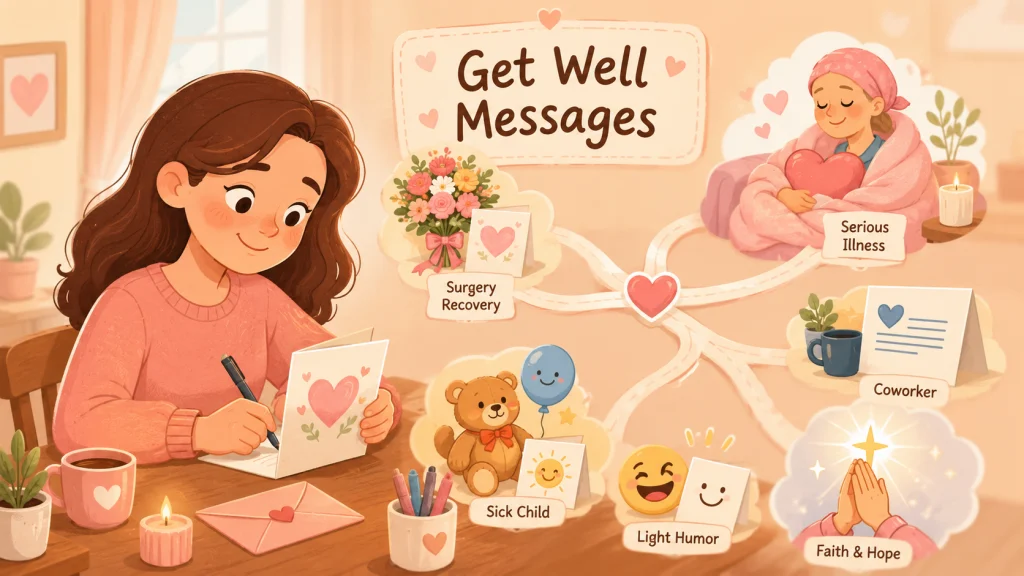
Get well messages aren’t one thing. The right words for someone going home after a same-day surgery are not the right words for someone facing a serious illness, and what you’d write to a coworker is not what you’d write to a child. What follows is a guide to finding the version that fits, sorted by the situation you’re actually in: the type of illness, the relationship, the tone that feels honest, and how much room you have to say it. By the end, you’ll know exactly which direction to go and why the generic version usually falls flat.
Why “feel better soon” so often misses
Most get well messages fail for the same reason. They’re written for “someone who is sick” instead of for the actual person, in the actual situation, that the writer has in mind. I’ve sent the generic version. Everyone has. It’s not wrong, exactly. It’s just thin, and the person reading it can usually feel the thinness, even if they’d never say so.
What changes everything is specificity, and specificity comes from knowing two things: what kind of recovery this is, and what kind of relationship you have with them. Someone coming home from a planned surgery needs something different than someone who just got a diagnosis they’re still absorbing. A coworker needs something different than your kid’s best friend from school. Once you know which situation you’re in, the right words get a lot easier to find, because you’re no longer trying to write something that works for everyone. You’re writing for one person.
Start with what they’re actually going through
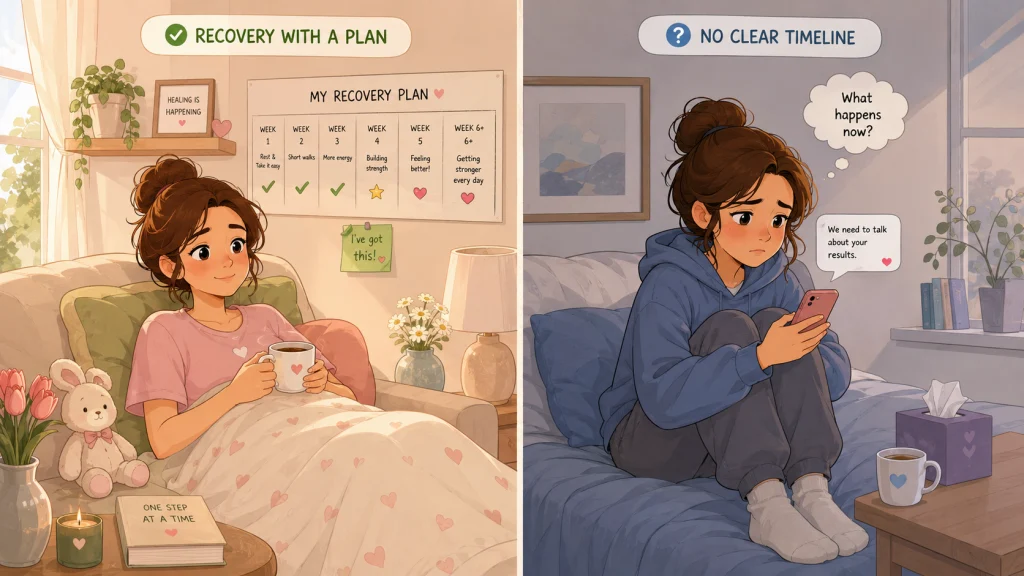
The biggest mistake I see, and the one I made early on, is treating “surgery” and “serious illness” as the same category just because they both involve a hospital. They’re not. Surgery, even a big one, usually has an end date attached to it. Someone knows roughly when they’ll feel more like themselves. A serious illness often doesn’t come with that certainty, and a message that assumes a quick bounce back can land strangely, even if it was written with love.
If someone just had surgery, the most useful thing your message can do is acknowledge the specific thing they went through without dramatizing it, and offer something concrete: a meal, a ride, company on the couch. Start with the guide to messages for someone recovering from surgery if you need examples for different kinds of procedures, or if you’re not sure how soon is too soon to send anything at all.
If the situation is heavier, a serious diagnosis, ongoing treatment, something that doesn’t have a tidy timeline, the words need more room to breathe. You’re not wishing someone a speedy anything. You’re telling them you’re there, for whatever this turns out to be, without pretending to know how it goes. I’ve found that the messages people remember most from this kind of stretch are the ones that didn’t try to fix anything. Go to messages for someone with a serious illness when you need wording that can sit with uncertainty instead of trying to solve it.
| Situation | What the message should do |
|---|---|
| Minor illness, a cold or flu | Keep it light, brief, and a little warm. No need to make it heavy. |
| Planned surgery, short recovery | Acknowledge the procedure specifically, offer something practical. |
| Serious or ongoing illness | Skip timelines and fixes. Say you’re there, without conditions. |
| Long-term recovery, weeks or months | Plan for more than one message. The first wave isn’t the hard part. |
That table is a starting point, not a script. The same person can move through more than one of these rows in the same month, and your message should move with them. What stays constant is the instinct to ask yourself, before you write anything, “what is actually true about where they are right now?”

Who you are to them changes what you can say
The same illness, the same week, can call for two completely different messages depending on who’s sending them. A close friend can say almost anything and have it land as care. A coworker has less room, not because the care isn’t real, but because the relationship hasn’t earned that kind of closeness, and pretending otherwise can feel uncomfortable for the person on the receiving end.
For a coworker or manager, the safest and often kindest move is to keep it warm but not familiar. You’re letting them know they’re missed and not under pressure, without reaching for intimacy that isn’t there. Start with get well messages for a coworker if you need wording that feels kind without sounding too personal, even when you don’t know them well.
Writing to a child is its own thing entirely, and it’s one people tend to overthink. Kids don’t need elaborate language. They need to feel like someone they like is thinking about them, and ideally something that makes the day feel a little less like “the day I was sick.” Simple, a little playful where it fits, and short enough that it doesn’t feel like a lecture about getting better. For wording that changes by age and closeness, use the piece on get well wishes for a sick child.
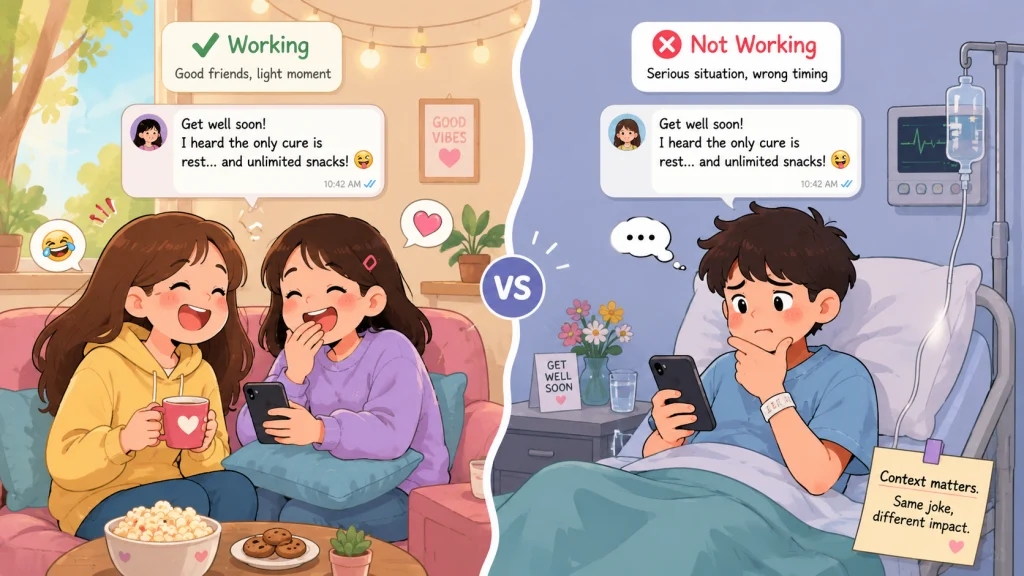
When humor is the right call, and when it isn’t
Funny get well messages work better than almost anything else, when they work. The problem is that “when they work” depends entirely on the relationship and the situation, and getting it wrong can sting more than saying nothing at all. I’ve sent a joke that landed perfectly and, a year later in a different situation, almost sent one that would have landed terribly. The difference wasn’t the joke. It was the moment.
Humor tends to work when the illness is minor, the relationship is close, and the person has a track record of laughing things off. It tends not to work in the early days of something serious, or with someone you don’t know well enough to predict how they’ll take it. If you’re unsure, the safer bet is warmth first, with maybe one lighter line near the end rather than the whole message. Use funny get well messages when you already know humor belongs in the relationship and you want help choosing a line that won’t make the moment feel smaller.
Short messages, and what to write when everyone’s signing the same card
Sometimes the right length is just a sentence or two, and that’s not a failure. A short message, written with care, can land harder than a long one written out of obligation. The trick is making sure the short version doesn’t read as rushed. A few well-chosen words, the kind that show you actually thought about this person specifically, will always beat three paragraphs of filler. If space is limited, the guide to short get well messages gives you lines that still feel personal.
Group cards are a different challenge. Everyone wants to add something, but nobody wants to repeat what the person before them already wrote, and the result is often ten variations of “feel better soon!” stacked on top of each other. If you’re the first to sign, you set the tone for everyone after you, so it’s worth taking a beat. If you’re the fifth person signing, the goal isn’t to outdo anyone, it’s to add something that’s actually yours. The piece on what to write in a group get well card is the better fit when the problem isn’t what you feel, but how to say it after everyone else has already written something.
When prayer is part of how you show up
For some people, and some families, sending a message without some kind of prayer or blessing wouldn’t feel complete, and that’s worth honoring rather than working around. The thing to keep in mind is that this only lands well if it’s part of how you’d normally talk to this person. If faith is already part of your relationship, naming it in a get well message feels like an extension of that, not an addition.
If it’s not something you’d normally say to each other, it can feel like it came from somewhere else, even if the sentiment is genuine. Use prayers for healing and get well when you want the message to include faith but still sound like your own voice, not like a line copied from somewhere you wouldn’t normally speak from.
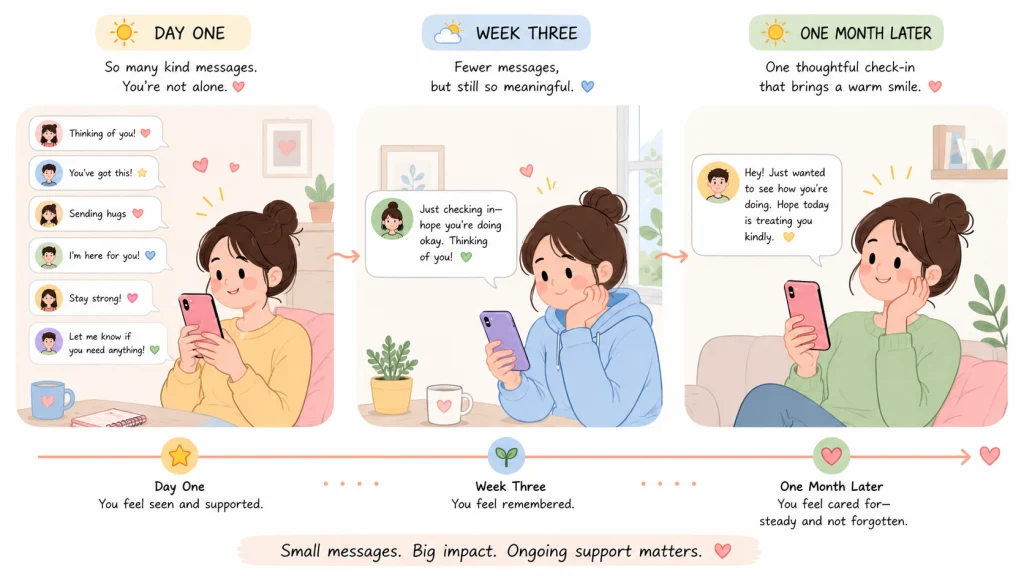
The messages that matter most are the ones that come later
Here’s something I didn’t understand until I’d watched it happen more than once. The first message, the one sent right when someone gets sick or right after surgery, is almost never the one that matters most. People expect that one. What they don’t expect, and what tends to stick with them, is the message that shows up two weeks later, or a month later, when everyone else has moved on and the recovery is still going.
If someone you care about is dealing with something long-term, the most generous thing you can do isn’t a bigger first message. It’s a smaller, ongoing one. A short “thinking of you, how’s today going” sent at week three says more than a longer message sent on day one ever could, because it tells them they haven’t been forgotten once the situation stopped being new. For help pacing those check-ins without disappearing or overwhelming them, go to messages during long-term illness.
- If it’s been a few days: a short, specific message referencing how they were doing last time you spoke.
- If it’s been a few weeks: something that doesn’t ask “how are you feeling” again, but offers a small distraction instead.
- If it’s been a month or more: a message that acknowledges this is still ongoing, without making them explain it all again.
- At any point: an offer of something specific, rather than “let me know if you need anything,” which most people won’t take you up on even when they need it.
Finding the version that’s actually yours
None of this is about finding the perfect formula, because there isn’t one. What changes the outcome is taking a minute before you write anything to think about where this person actually is, what your relationship can hold, and how much room you have to say it. Sometimes that means a quick, light line. Sometimes it means something with more weight, sent without expecting a reply.
If you’re still working out how to put any of this into words, even after narrowing down the situation, it can help to step back and think about what you’re trying to say in general terms first, the kind of thing that applies whether someone’s sick, grieving, or just having a hard week. That broader sense of words of comfort for someone going through a hard time is a good place to start if the specific wording still isn’t coming. And if you’re staring at a blank card and just need a starting point before you personalize it, the guide to what to write in a get well card walks through that first draft.
FAQs
💬 What’s a good simple get well message to send someone?
Something specific beats something generic every time. Even a short line that references what they’re actually dealing with, like “thinking about you after your surgery this morning, hope today is gentle,” says more than a general wish.
🤔 What should you avoid saying in a get well message?
Avoid promises about how fast they’ll recover, comparisons to someone else’s experience, and anything that turns their situation into advice about what they should be doing differently. Keep the focus on them, not on fixing.
😊 Is it okay to be funny in a get well message?
It can be, if you know the person well and the situation isn’t heavy right now. If there’s any doubt, lead with warmth and let humor be a small addition rather than the whole message.
📝 What do you write in a card when several people are signing it?
Try to add something specific to you, rather than repeating what’s already been written above your line. Even one sentence that’s clearly from you personally will mean more than another “feel better soon.”
⏳ How long after someone gets sick should you keep sending messages?
For anything longer than a quick illness, longer than most people expect. A short check-in two or three weeks later, after the initial attention has faded, often means more than anything sent in the first few days.
🙏 How do you write a get well message that includes a prayer?
Only include it if faith is already a natural part of how you talk to this person. If it is, a short blessing alongside your own words feels genuine. If it isn’t, it can feel like it came from somewhere else.