Most romantic appreciation messages say the same thing in slightly different words: thank you for loving me, I’m so lucky, you’re the best. They’re not exactly wrong, but they’re general enough to apply to almost anyone, which means they rarely land the way you want them to. What I have found works better is naming the specific thing. Not “thank you for being amazing” but “thank you for being the person I call first.” This is where you find the words for that, organized by what you’re actually trying to say, whether it’s about him specifically, the small things, how he’s changed you, or the simple fact that you feel lucky and safe with him.
The kind of appreciation that actually gets noticed
There’s a moment I keep coming back to. A friend of mine had been with her partner for years, long enough that “I love you” had started to feel like background noise, said on the way out the door, said before falling asleep, true but almost invisible from how often it got repeated. One evening she told him, instead, that she’d noticed how he always let her finish her sentence before responding, even when she was rambling, even when he clearly already knew what she meant. He didn’t say much back. But she told me he brought it up again weeks later, like it had stayed with him in a way “I love you” hadn’t that week. That’s the difference between general affection and named appreciation, and it’s the difference most romantic messages miss entirely.
General appreciation is easy to write and easy to forget. “Thank you for everything you do” could be said by almost anyone to almost anyone. It’s true, but it doesn’t tell your partner what specifically you see in them. Named appreciation does the opposite. It says: I noticed this particular thing, about you, specifically, and it mattered to me. That specificity is what makes someone feel truly seen rather than generally liked, and it’s the thread running through every set of messages below.
This is also where most of what’s already out there falls short. Search around for romantic appreciation messages and you’ll find page after page of lines that could be copied into any relationship without changing a word. What’s missing is the version built around what your partner actually does, the role they play in your life, and the specific feeling they give you. That’s what the messages below are organized around, broken down by exactly that.
Appreciation organized by what you’re thanking him for
The first way to think about romantic appreciation is by what, specifically, you’re grateful for. This sounds obvious, but most people skip straight to a generic “thank you for being you” without ever landing on the actual thing. Below are five different angles, each one built around a different kind of appreciation, and each one with its own collection of messages depending on what you want to say.
If what you’re feeling is appreciation for him as a person, for who he is rather than what he does, that deserves more than a general thank-you. The messages built around that angle live over in appreciation messages for him, and they lean into character, presence, and the things about him that don’t change depending on the day.
Sometimes the appreciation isn’t about a trait at all. It’s about the role he plays. The feeling of having someone who is, simply, your person. The one you call first, the one who knows the version of you that nobody else gets to see. That specific kind of gratitude has its own shape, and you’ll find it in you are my person messages.
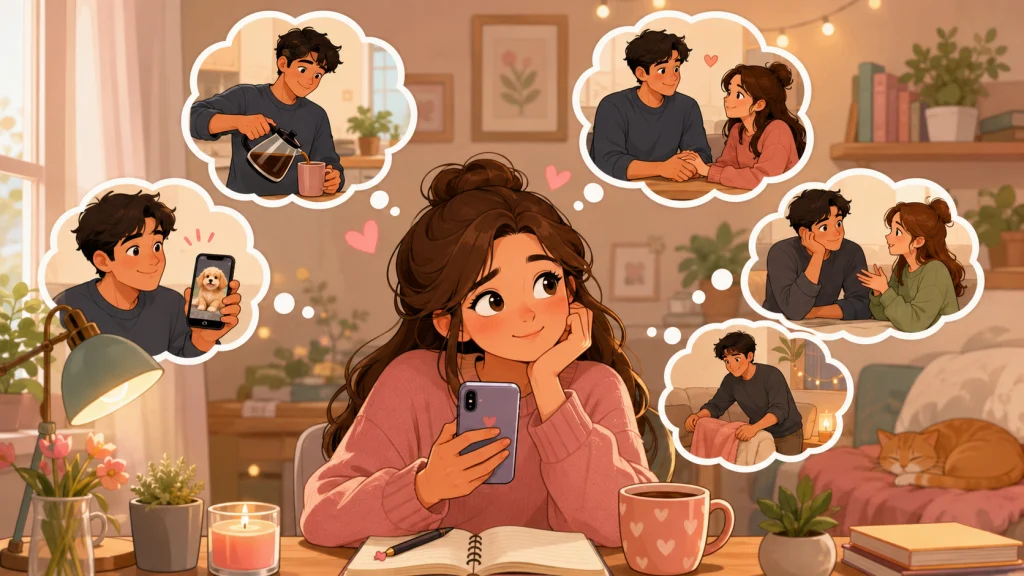
Then there’s the appreciation that comes from the small stuff. Not the big romantic gestures, but the way he remembers how you take your coffee, or always takes the side of the bed closer to the door, or texts you a photo of something that reminded him of you for no reason at all. These little things often go unacknowledged simply because they’re so consistent they become invisible, and little things I love about you is built entirely around naming them out loud.
Another angle worth its own space is appreciation for how he’s changed you, specifically for the better. Not in a way that implies you needed fixing, but in the sense that being with him has made you more patient, more confident, more yourself. That’s a particular kind of thank-you, and you make me better messages is where those words live.
And then there’s the feeling of safety. Not safety in the sense of physical protection necessarily, but the emotional kind: the sense that you can say the wrong thing, have a bad day, show up without makeup or patience or energy, and still be loved exactly the same. That feeling deserves its own appreciation, separate from everything else, and you’ll find it in you are my safe place messages.
Appreciation organized by the feeling behind it
The second way to think about this isn’t about what he did; it’s about what you feel when you think about him. Two feelings come up again and again when people try to put romantic appreciation into words, and they’re different enough from each other that they deserve to be split apart rather than blended into one big category.
The first is the simple, almost disbelieving feeling of being lucky. The sense that, out of everyone, somehow this person ended up choosing you, and you chose them back, and most days you can’t quite believe how that worked out. This feeling tends to come up most around anniversaries, or quiet moments, or after watching him do something small and kind without thinking about it. If that’s the feeling you’re sitting with, I am lucky to have you messages is built around exactly that.
The second is less about luck and more about partnership, the appreciation that grows out of actually building something together over time. This is the gratitude that shows up after you’ve been through something hard together, or after years of small decisions that added up to a life, or simply from looking at someone across the table on an ordinary Tuesday and feeling like a team. That’s a different kind of appreciation from the early, lucky feeling, and it has its own collection in partnership appreciation messages.
What’s worth noticing is that these two feelings, lucky and partnership, often show up at different points in a relationship, but neither one replaces the other. You can feel lucky after fifteen years, and you can feel like a team after two. The point isn’t to pick the one that matches your relationship’s age. It’s to pick the one that matches what you’re actually feeling right now, today, when you sit down to write something for him.
Picking the angle that actually fits
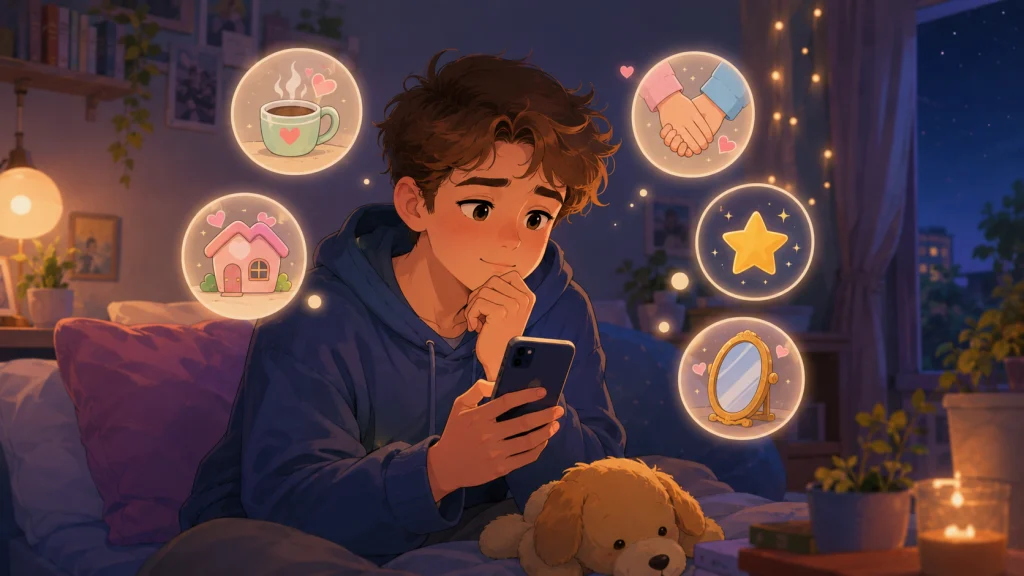
With seven different directions to choose from, it can feel like a lot, but the choosing itself is actually the easy part once you stop overthinking it. The honest approach is to ask yourself what you’d say if he asked you, right now, out loud, “What made you think of me today?” Whatever answer comes first, that’s almost always the angle to write from. If your first thought is about something small he did this morning, that’s the little things direction. If it’s about how different you feel as a person since being with him, that’s the making-you-better direction. If it’s just a wave of “I can’t believe I get to do life with this person,” that’s either lucky or partnership, depending on whether it feels like a spark or a steadiness.
There’s also nothing wrong with combining angles in a single message, especially for something like an anniversary or a card, where you have more room. A message can start by naming a small thing he does, move into how that small thing reflects something bigger about who he is, and end with the simple feeling of being lucky to have him. The categories here aren’t meant to be rigid boxes. They’re meant to help you find a starting point when the blank message field feels too open and you don’t know where to begin.
If you’re looking for the broader picture, the wider collection of messages for partners covering everything from appreciation to support during hard times sits over in love and relationship messages, which is a good place to go if none of the seven angles here feel like quite the right fit for what you’re trying to say.
The words you choose are the appreciation
I think the reason this matters more than it might seem is that, for most couples, appreciation doesn’t get expressed through grand gestures very often. It gets expressed, if it gets expressed at all, through small moments of someone noticing something and saying so. A message is one of those moments. It doesn’t have to be long, or perfectly written, or even particularly original. What makes it land is whether it’s specific, whether it sounds like you, and whether it names something true about him rather than something that could be said about anyone.
Whichever angle feels right today, him specifically, the little things, how he’s changed you, the feeling of being lucky, the feeling of being a team, or the sense that he’s the safest place you know, that’s the one worth following. The words don’t need to cover everything. They just need to say the one true thing you’re feeling right now, in a way he’ll actually feel too.
FAQs
💌 How do I write a romantic appreciation message that doesn’t sound generic?
Name the specific thing, not the general feeling. “Thank you for always saving me the last bite” says more than “thank you for everything,” because it tells him you actually noticed.
🌹 What’s the difference between an appreciation message and a love message?
A love message says how you feel. An appreciation message says what he did, or who he is, that made you feel that way. They overlap, but appreciation always points to something specific.
🤍 How often should I send appreciation messages to my partner?
There’s no set number. What matters more is that it feels like it’s coming from a real moment, something you actually noticed, rather than a habit you’re keeping up.
✨ What if I’m not good with words?
Start with the thing itself, not the words. Think of one specific moment or habit you appreciate, then describe it plainly. The specificity carries the message even if the language is simple.
🧡 Can these messages work for a long-term partner, not just someone new?
If anything, they matter more. The longer you’re together, the easier it is for appreciation to go unsaid simply because it’s assumed. Naming it again, after years, often lands harder.