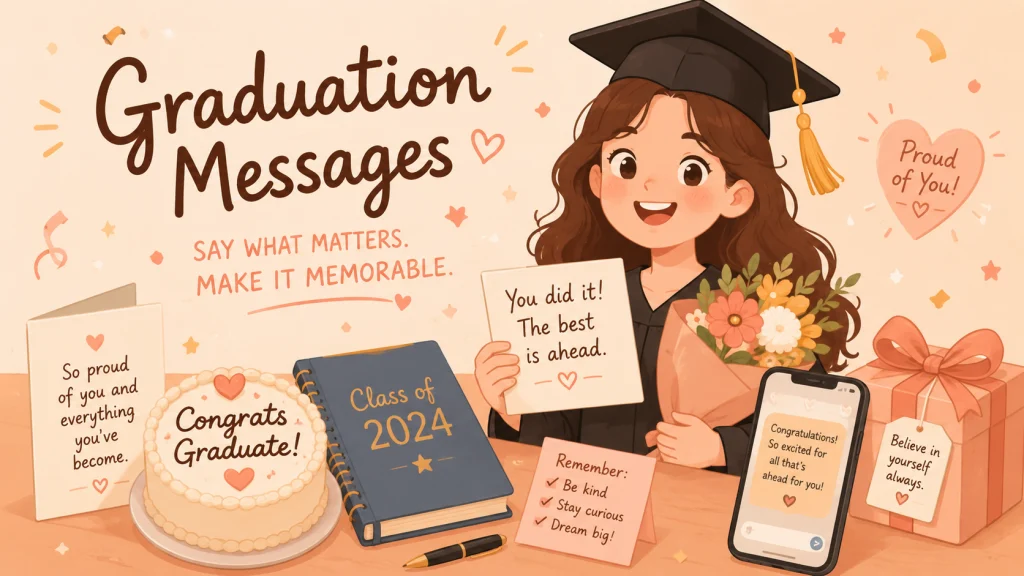
Graduation messages work best when they fit the exact place they are going and the exact relationship behind them. I would not write the same thing on a cake that I would write in a parent’s yearbook note, and that is the point. Start with the format, the sender, the tone, or the milestone, then choose words that sound like they came from a real person instead of a card aisle. By the end, you should know which kind of graduation wishes, quotes, or simple congratulations actually fits the graduate in front of you.
Graduation is the day almost becomes done
Graduation messages can feel harder than they look because graduation is not only one emotion. Graduation is the day you stop calling it almost and start calling it done. Somewhere between the cap being tossed and the photos that go on for a little too long, someone hands you a card or a phone and expects you to have words ready.
That is usually the moment people freeze, not because they do not care, but because they care in several directions at once. There is pride, relief, disbelief, hope, and sometimes a little ache because this ending is also a beginning. What I have found is that the best starting point is not “say something impressive,” but “say the part that is true from where you are standing.”
If you came here because you need graduation wishes, graduation quotes, or a simple congratulations for graduation that does not feel copied, begin by narrowing the moment. A message written by a parent has a different job than one written by a teacher. A line on a cake has a different job than a note tucked into a card, and treating those as the same problem is where the wording usually starts to go flat.
Choose the path before you choose the words
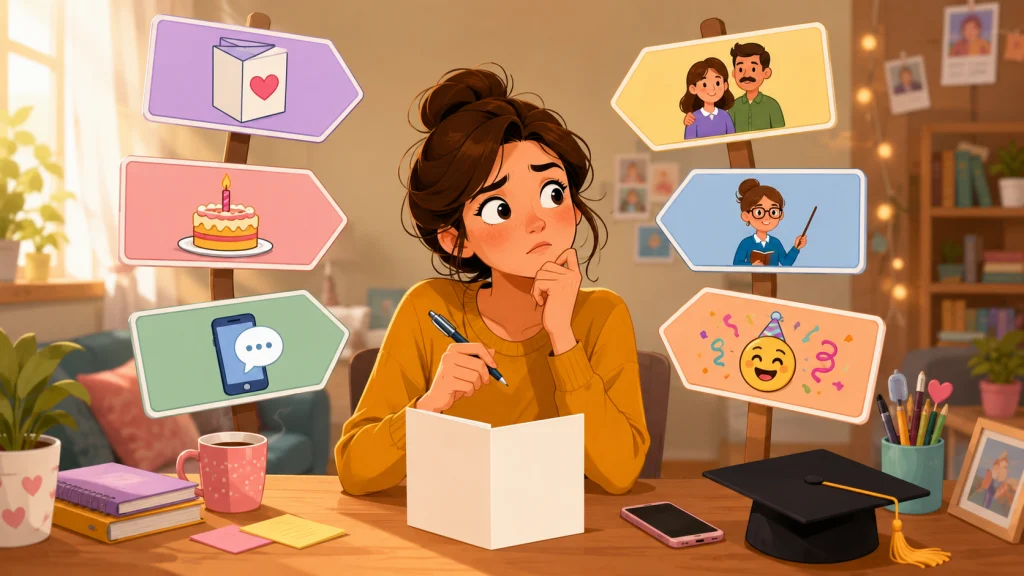
Most people start by trying to write the sentence. I think that is why so many graduation notes become too broad too quickly. Before the wording gets easier, the purpose has to get smaller.
A quick way to choose is to ask what is actually making you stuck. Sometimes you are not stuck because you have no feelings, you are stuck because the space is too short, the relationship is too close, or the tone feels risky. Once you know which problem you are solving, the words stop having to do every job at once.
- If space is the problem, start with the format: card, cake, yearbook, or text.
- If emotion is the problem, start with who you are to the graduate.
- If the relationship has a specific rhythm, start with the tone.
- If the graduate is very young, start with the milestone itself.
This sounds simple, but in practice it changes the whole message. I have seen people write three careful paragraphs when what they really needed was one honest sentence on a card. I have also seen people choose a joke because it felt safer, when a single proud line would have meant more.
Start with the format you are working with
The same feeling may need completely different wording depending on where it is going. A card gives you room to say something layered, but that room can tempt you to over-explain. If you have a card in hand and are staring at the blank inside cover, what to write in a graduation card is the place to start when you want the note to feel full without feeling padded.
A cake is the opposite problem. It gives you almost no space, which means every word has to carry its weight without trying to be profound. For that version of the moment, a graduation message on a cake is about finding a line that feels celebratory, readable, and not awkward when it is sitting in frosting.
Yearbooks sit somewhere more permanent. Whatever you write there may be read long after the ceremony, by someone who has grown into a different version of themselves. That is why yearbook messages from parents need a steadier kind of warmth, one that can survive being reread when the day itself is no longer fresh.
Texts have a different kind of pressure because they often happen while the day is still moving. You may be writing from another city, before the ceremony, after the photos, or during the strange quiet after everyone has gone home. If you need words that can land quickly without sounding careless, graduation day texts are for that immediate, in-the-moment kind of message.

Or start with who you are to the graduate
For a lot of people, the format matters less than the relationship. A message from a parent carries a different weight than one from a teacher, and even within a family, a message from a mom often reads differently than one from a dad. Not because either voice is better, but because each bond has its own history behind it.
If you are writing to a daughter from both parents, the hard part is often making the message feel united without making it sound formal. Graduation messages for a daughter can hold pride, tenderness, and that strange parental feeling of watching someone become more themselves. The mistake I see here is trying to summarize an entire childhood, when one specific thing you have watched her overcome can say more.
A father writing to his son may be dealing with a different kind of quiet. Some families say everything out loud, but many do not, and graduation can become one of the few moments where pride has somewhere to go. A dad to son graduation message works best when it does not try too hard to sound grand, because plain words often feel more believable there.
A mother writing to her son has its own tenderness too. It can be easy to lean too far into nostalgia and forget that the graduate is also stepping forward, not only being remembered as a child. A mom to son graduation message gives that feeling room without turning the whole note backward.
Teachers are in a different position entirely. You may have watched a student grow in confidence before they knew how to see it in themselves, and graduation is sometimes the only chance to say that clearly. A teacher to student message should respect the boundary of that relationship while still naming the growth you actually saw.
| If you are writing as… | What the message usually needs |
|---|---|
| A parent, to a daughter | Warmth that feels proud without trying to summarize her whole life. |
| A dad, to his son | Plain pride, steady belief, and words that do not feel forced. |
| A mom, to her son | Tenderness that honors the past without holding him there. |
| A teacher, to a student | Specific recognition of growth, effort, and character. |
| A proud parent in general | Proof that you noticed the work, not only the ceremony. |
That last one, the proud-parent angle, deserves its own space because pride at a graduation is rarely simple. It is not only pride in the result, it is pride in the late nights, the second tries, the quiet effort, and the parts of the story other people may not know. A proud graduation message should make the graduate feel seen for the road, not only applauded at the finish line.
Or start with the tone that actually fits
Sometimes the relationship and the format are both clear, but the tone is the part that feels uncertain. Not every graduation message needs to be deeply sentimental in the traditional sense. Some need to be short because that is what the relationship can carry, some need to be funny because seriousness would feel strange, and some need to come from faith because that is how the family holds important milestones.
I am careful with tone because the wrong one can make a message feel like it belongs to a different relationship. A funny note can be perfect for the graduate who hates being fussed over, but it can feel careless if humor is used to dodge real pride. A faith-filled message can be deeply comforting when it fits the family, but it should still sound personal, not like a line copied from somewhere else.
- If short is what you need, a short graduation message focuses on saying less without making the note feel empty.
- If the relationship can carry a joke, funny graduation messages help keep the warmth inside the humor.
- If faith belongs in the moment, Christian graduation messages keep the focus on blessing, gratitude, and hope.
None of these tones are better than the others. They are different doors into the same day, and the right one is usually the one the graduate would recognize as coming from you. If you would never speak in a formal, dramatic voice in real life, the card does not need to suddenly become formal and dramatic either.
What makes a graduation message feel personal
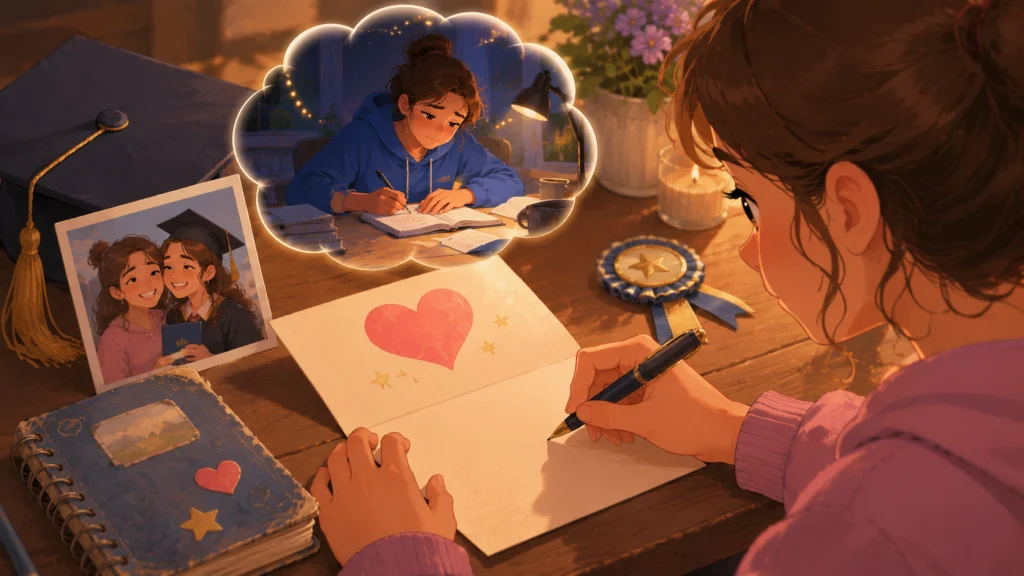
A graduation message feels personal when it proves you are writing to this graduate, not to a generic person in a cap and gown. That proof does not have to be long. It can be one memory, one quality, one sentence about the effort you saw, or one small detail only someone close enough would know to mention.
The part people often get wrong is trying to sound bigger than the relationship. They reach for phrases about the future, dreams, success, and the next chapter because those are the words graduation seems to ask for. Those words are not bad, but they need something human beside them, or they start to sound like they could have been sent to anyone.
I would rather read “I watched you keep going when senior year got heavy, and I hope you know how proud I am of that” than a perfect paragraph that never names anything real. I would rather see “You earned this, and I hope today gives you a minute to feel it” than a sentence trying to turn graduation into a life philosophy. Specific does not always mean detailed, it means the sentence has a person behind it.
That is also where graduation quotes can help or hurt. A quote can give shape to a feeling, but it should not replace your voice completely. If you use one, add a line before or after it that only you could have written, even if that line is simple.
When the graduation is the very first one
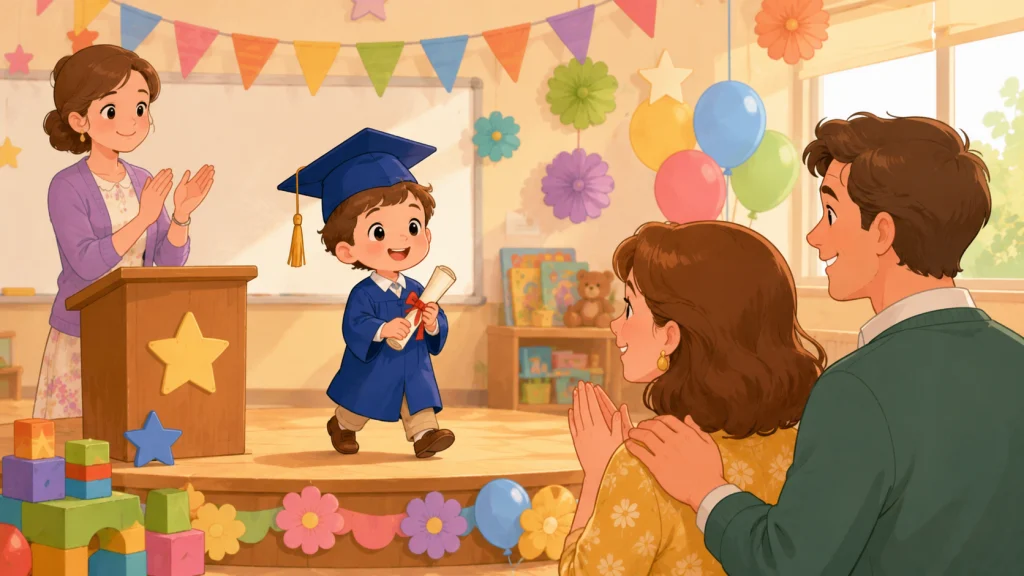
Kindergarten graduation gets treated like a joke sometimes, and I understand why. There is no diploma that changes the practical shape of the child’s life, no career door opening, no serious next step in the adult sense. But for a small child walking across a little stage in a paper cap, the day can feel enormous.
For the parents watching, it can feel bigger than expected too. It is one of those small ceremonies that suddenly shows you a child becoming a little more separate, a little more brave, a little more themselves. A kindergarten graduation message should take the day seriously without making it too heavy for the child who is living it.
The best tone here is usually light, proud, and concrete. Instead of trying to make the moment sound like high school or college graduation, keep it close to the child’s world: bravery, learning, growing, trying, smiling, walking across the stage. That keeps the message sweet without pretending the milestone is something it is not.
Pick the version that sounds like you
Graduation messages, more than most, depend on the specifics. The same words that feel exactly right coming from a parent can feel strange coming from a coworker, and a message perfect for a cake would feel oddly clipped inside a card. Rather than trying to write something broad enough to fit everywhere, start from whichever detail is most true right now.
Maybe that detail is the format in your hands. Maybe it is the relationship you have with the graduate, the tone that feels honest between you, or the fact that this is their very first ceremony. For the broader collection of celebration messages across other milestones, that path is there too, whenever graduation is not the only thing you are trying to put into words.
FAQs
🎓 What should I write in a graduation card?
Start with congratulations, then add one specific thing you noticed about the graduate. A memory, a quality, or a line about the effort it took to get here will usually feel warmer than a general statement about the future.
📝 What is a good short graduation message?
A good short message says congratulations and gives the words one personal detail. Short does not mean empty. It means you are trusting a few honest words to carry the feeling.
😄 Is it okay to send a funny graduation message?
Yes, if humor already belongs in the relationship. The safest funny graduation message still has a real line of pride underneath it, so the joke does not make the moment feel smaller than it is.
🍰 What do you write on a graduation cake?
Keep it short, clear, and easy to read. A cake message should not try to carry a whole paragraph, so something like “So proud of you” or “You did it” often works better than a long sentence.
💬 Should I use a graduation quote or write my own message?
A quote can work if it truly fits the graduate or the day. I would still add one sentence in your own words, because that is usually the part the graduate feels most.
👶 Is kindergarten graduation worth writing a message for?
Yes, especially if the child or family is treating the day as meaningful. Keep the message light, proud, and simple, so it matches the size of the child’s world instead of making the moment too heavy.
❤️ How do I make a graduation message less generic?
Name something specific: effort, growth, courage, humor, kindness, or a moment you remember. One true detail can make even a simple congratulations feel personal.