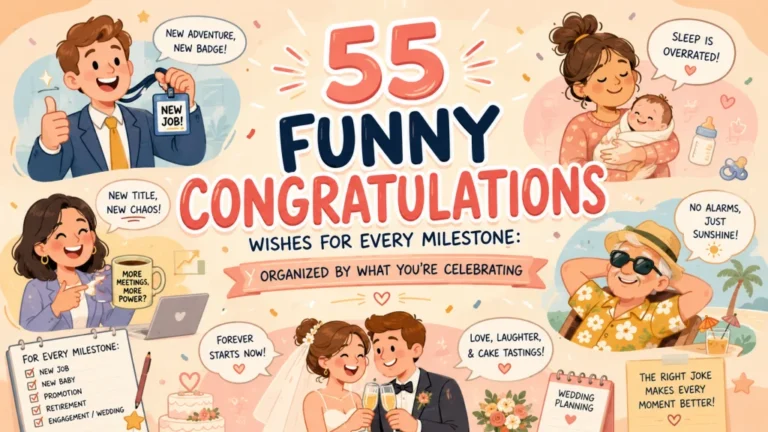
Short congratulations wishes get dismissed as lazy more often than they deserve. Some of the messages that land hardest are two sentences. A few are just one. These 50 cover the full range: one-liners, two-sentence versions, and specific messages for the moments that come up most often. Along the way I want to talk about when brief is the right call and when it reads as dismissive, because knowing the difference is what separates a short message that means something from one that reads like an afterthought. For broader context, see short congratulations wishes that still mean something.
When Short Is the Right Call (and When It Isn’t)
I used to think that longer meant more. More care, more thought, more of yourself in the words. Then I started paying attention to which messages I actually remembered receiving, and almost none of them were long. The ones that stayed were specific and brief. They said one true thing and stopped there, and it was that restraint that made them feel considered rather than reflexive. For related message ideas, see brief congratulations message.
There is a version of short that is lazy. “Congrats! 🎉” from someone who clearly spent three seconds on it. That version reads as nothing, and most people can feel the difference immediately. But there is another version of short that is earned: a single line that names exactly what you are celebrating, no filler attached. That kind lands harder than three paragraphs would have. The gap between them is intention, and intention does not take many words. It just takes the right ones.
Short usually works when the relationship is casual or professional and a longer message would feel out of proportion. It works when the moment is genuinely happy and uncomplicated, when you know the person well enough that they do not need more from you, or when you want to say something real without turning it into an event. It is probably not the right call when the achievement took years and a one-liner might read as undervaluing it, when the person is someone close who might expect more, or when the situation carries emotional layers a brief message cannot hold.
Most people overthink this. If you know the person, a short message from you carries weight they would not need explained. If you are less close, brief and warm is usually the right register anyway. The real question is not about length. It is about whether what you send was written with that person in mind, or just dispatched. That test applies to every message below, short or otherwise.
| Feels intentional | Reads as dismissive |
|---|---|
| Names the achievement specifically | Generic (“Congrats!” with nothing else) |
| Sent with reasonable timing | Days late with no acknowledgment of the gap |
| Stands on its own without apology | Opens with “sorry I can’t say more” |
| Fits the relationship and the moment | Clearly copy-pasted from somewhere |
| Specific to what this person actually did | Could have been sent to anyone |
That last row is worth sitting with. Anything that could have been sent to anyone tends to feel like it was sent to no one. Brevity is not the problem. Being generic is.

One-Sentence Congratulations
These work because they do not try to do more than they are. One clear thought, nothing padded around it. The rule I keep coming back to with one-liners is specificity: the more it sounds like something you could only say to this person about this moment, the harder it lands. Read through these and notice which ones could be dropped into a text right now without changing a word, and which ones might need one detail added to fit your situation.
- This is so well-deserved, and I’m genuinely happy for you.
- You worked hard for this, and now you get to enjoy every second of it.
- I knew this was coming. I’m just glad the rest of the world finally caught up.
- Watching you get here has been one of the good things about knowing you.
- You earned this.
- Not everyone gets what they work for, but you made sure you did.
- This is your moment. Take it.
- Everything you put into this just paid off, and it shows.
- Proud of you doesn’t quite cover it, but it’s the truest thing I’ve got.
- Some news makes you stop what you’re doing and just smile. This was that.
- You’ve been building toward this for a while, and it is good to see it arrive.
- The right person got this, and that matters.
- What you did to get here was not easy, and I hope you know I noticed.
- This is exactly what you deserve.
- I don’t have many words right now except: yes, and it’s about time.
A few of these carry their full weight only when you actually mean them. “You earned this” sent to someone who got lucky reads hollow. Sent to someone who put in the work when no one was paying attention, it lands exactly right. The message does not change. The context does everything.
Two-Sentence Congratulations
Two sentences give you just enough room to add something the first sentence set up. A second line that personalizes, acknowledges the effort, or says plainly what you are feeling. The mistake most people make here is writing the same thought twice in slightly different words. The second sentence should earn its place by adding something the first one did not, even if only by a small degree.
- I heard the news and had to stop for a second. That’s a big deal, and you should let it be.
- You’ve been working toward this quietly for a long time. I’m glad it finally happened out loud.
- This didn’t come easily for you, and that’s exactly why it means something. Congratulations.
- I keep thinking about how hard this was to get to. You did it anyway.
- Not a lot of people get this far. You should feel proud.
- This one’s been a long time coming. I hope you’re celebrating properly.
- You told me once this is what you wanted. Now look.
- There are people who talk about things like this their whole lives. You actually did it.
- Knowing what you put into this makes the news feel even better. Well deserved.
- The timing, the work, the patience, it all added up. Congratulations.
- I’ve been rooting for this one. Really glad it came through.
- When I saw the news I genuinely smiled. That’s the best kind of announcement to receive.
- You made it look quieter than it was. I know better.
- This is the kind of thing that doesn’t happen by accident. You built this.
- I heard about it from someone else and made a note to say something properly. This is that.
That third one, “This didn’t come easily for you,” is one I have used when I knew someone had struggled for a long time before the thing finally broke their way. Acknowledging the difficulty does not undercut the celebration. Usually it deepens it. The person already knows what it cost, and hearing that you know too is sometimes exactly what a congratulations needs to carry.

Short Congratulations by Milestone
The milestone shapes the message more than most people give it credit for. A new job congratulations and a wedding congratulations are doing different emotional work, even at the same length. These are grouped by moment so you can find the register that actually fits what you are writing about, rather than adapting something that was written for a different occasion entirely.
New Job
New job messages carry a specific kind of energy: forward-looking, clean, a little excited. The person is stepping into something, not closing something out. The messages that work best here acknowledge the move without making it heavier than it needs to be. Keep it light and pointed forward.
- New chapter. You’re ready for it.
- This is a good move for you, and I think you know it.
- They got lucky getting you. Congratulations on the new role.
- It fits. I can already picture you there.
- You’ve been heading somewhere good for a while. Looks like you arrived.
New Baby
Baby congratulations are one of the places where brief can feel exactly right. The person is overwhelmed, almost certainly exhausted, and surrounded by a flood of messages. Something short and warm, that does not ask anything of them, often lands better than something elaborate. Say what you mean and leave room for them to just receive it.
- Your family just got even sweeter. Congratulations.
- They’re here, and the world is already different for it.
- I don’t have the words for this one. Just so happy for you. 💛
- The best kind of news to wake up to. Congratulations to your whole family.
- This is a big one. Enjoy every single second of it.
Promotion
Promotion messages are tricky because the best ones acknowledge the effort that preceded the title, not just the title itself. A lot of people send “congratulations on the promotion” and leave it there. The messages that actually feel good to receive are the ones that say, quietly, that you saw what it took to get there, even when no one else was paying close attention.
- You earned this and then some.
- They finally caught up to what you were already doing. Congratulations.
- The new title is just the official version of what you’ve been doing all along.
- Congratulations on the promotion, and the long-overdue recognition.
- You didn’t just get promoted. You built toward this, consistently, until it happened.
Wedding
Wedding congratulations are one of those moments where the instinct is to go long, to pour everything in. And sometimes that is right. But when brief works for a wedding, it works because it captures the warmth without reaching for poetry it cannot quite pull off. These lean into simplicity on purpose, and they are better for it.
- What a day to have. Congratulations to you both.
- Wishing you both more good years than you know what to do with.
- You found a good one. I’m so happy for you.
- Congratulations, and welcome to the best kind of together.
- Today was a long time coming. Here’s to everything after it.
If you are writing something short for a graduation instead, the feeling is close to a new job message but with something extra underneath it: one chapter ending at the exact moment another begins. Short graduation messages that get that balance right are worth looking at separately.
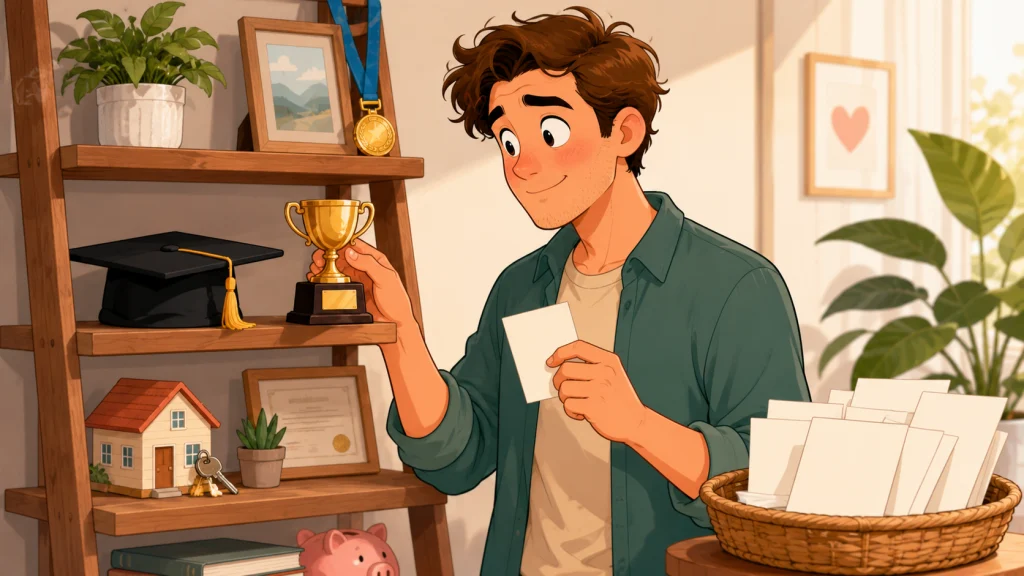
Making Brief Feel Intentional, Not Dismissive
The thing people get wrong most often with short congratulations is cutting too much. They strip out everything that sounds personal in the interest of being concise, and what remains is technically short but reads as empty. Brevity is not the same as emptiness. The goal is a message that is as short as it needs to be, not shorter than it should be.
What separates a short message that feels intentional from one that feels lazy is almost always a single specific detail. Not a long one. Just something that tells the person you wrote this for them. Not just their name, but a reference to what they actually did, how long it took, or what it means in the context of who they are. One sentence can carry all of that if it is written with care. Most short messages skip it, and that is the miss.
The other common failure is the apologetic opener. “Sorry this is short, but congratulations!” announces the limitation before the congratulations even lands. It signals that you know the message is not enough, which only makes it feel more so. A short message that stands on its own, with no disclaimer attached, reads as chosen rather than rushed. Trust it enough to send it without the apology wrapped around it.
The moments when brief is genuinely the wrong format are worth naming honestly. An achievement that took someone years of sacrifice, a congratulations to someone navigating complicated feelings alongside the good news, a message to someone who does not know you well and might read brevity as indifference: these are places where length earns its value. For those moments, spending more time with the broader range of celebration messages is worth it. The short ones above are for the moments when they fit, and they fit more often than people think.
Final Thoughts: Short Is Not Less
There is a persistent idea that effort and length are the same thing. That a short message is a small message, and a long one is a generous one. In my experience that is almost never true. The messages I have sent that landed hardest were often the ones I wrote in under a minute because I knew exactly what I wanted to say. The ones I labored over for twenty minutes and kept making longer were sometimes the ones that said the least.
Short congratulations work when they are honest, specific, and sent without apology. They do not need to carry everything. They just need to arrive and mean it. If the message you are about to send does that, it is enough. More than enough, most of the time.
For occasions that call for something fuller, the complete range of congratulations messages covers the moments where length earns its place. And if you need something brief for a specific anniversary milestone, short anniversary messages follow the same logic as these, adapted for that particular kind of weight.
FAQs
What’s a short way to say congratulations that doesn’t sound generic?
Name the specific thing they did or acknowledge how long it took. “You earned this” is short and generic. “You worked toward this for a long time and I watched you do it” is short and specific. The difference is one phrase that says this was written for them, not copied from a template.
Is it okay to send just one sentence as a congratulations?
Yes, when it is honest and specific. One sentence that names what the person did and says something true lands better than a paragraph of hollow filler. The length is not the issue. The intention behind it is.
When is a short congratulations appropriate vs. when should I write more?
Brief is usually right when the relationship is casual or professional and a longer message would feel out of proportion, or when the person is close enough that a short message from you already carries weight. Write more when the achievement took years, when the moment carries complicated emotions alongside the good news, or when you sense they would expect more from you specifically.
How do I make a short congratulations message feel more personal?
Add one specific detail: what they did, how long it took, or something only you would know to say. A brief message becomes personal the moment it stops being something you could have sent to anyone. It does not take many words. It takes the right ones.
What if I’m late sending a congratulations?
Send it anyway. A brief, honest message sent late is better than silence. You do not need to over-explain the gap. Something like “I’m late saying this, but I mean it: congratulations” does more than no message at all.