A retirement card moves around an office for one day, and most of what gets written on it is forgotten by lunch. This is about the other kind of line, the one a departing coworker actually remembers weeks later. I’ll walk through what makes a retirement message land instead of bouncing off, with real wording for a quick note, a closer friendship, a joke that’s allowed to be a little irreverent, and the line you write for a boss who’s heading out too. By the time you’re done, you’ll have more than enough words, and a much clearer sense of which ones are actually worth signing your name to. For broader context, see retirement message for coworker.
Everyone Else Is Writing the Same Four Words
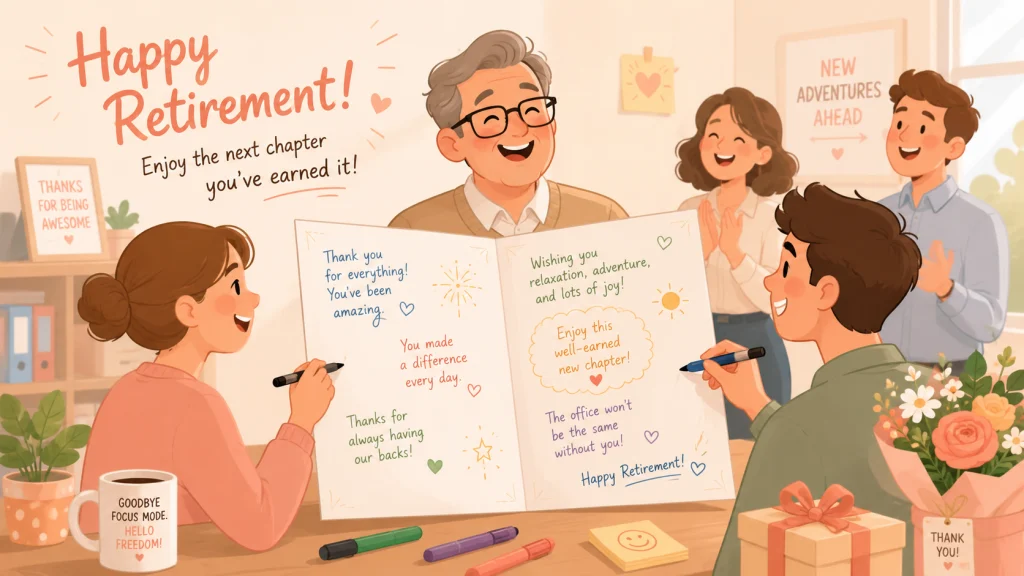
Someone on your team just announced their retirement, and now you’re staring at a blank card wondering what to even write. A retirement message for a coworker doesn’t have to read like a corporate send-off. By the time the card gets to you, half of it already says “wishing you the best” in one form or another, and most of the rest is some version of “you’ll be missed.” That’s not a criticism. It’s just what happens when a dozen people are handed five minutes and a pen between meetings.
I’ve stood over that same card more times than I can count, trying to figure out what to say to someone I’d worked beside for what felt like forever but never actually talked to about anything real. The pressure isn’t about finding a perfect line. It’s about not wanting your two sentences to sound exactly like the eight sentences already on the page. Once you stop competing with the rest of the card and start writing toward the actual person leaving, the words tend to come faster than you’d think.
The Version Everyone Writes, and the One That Actually Lands
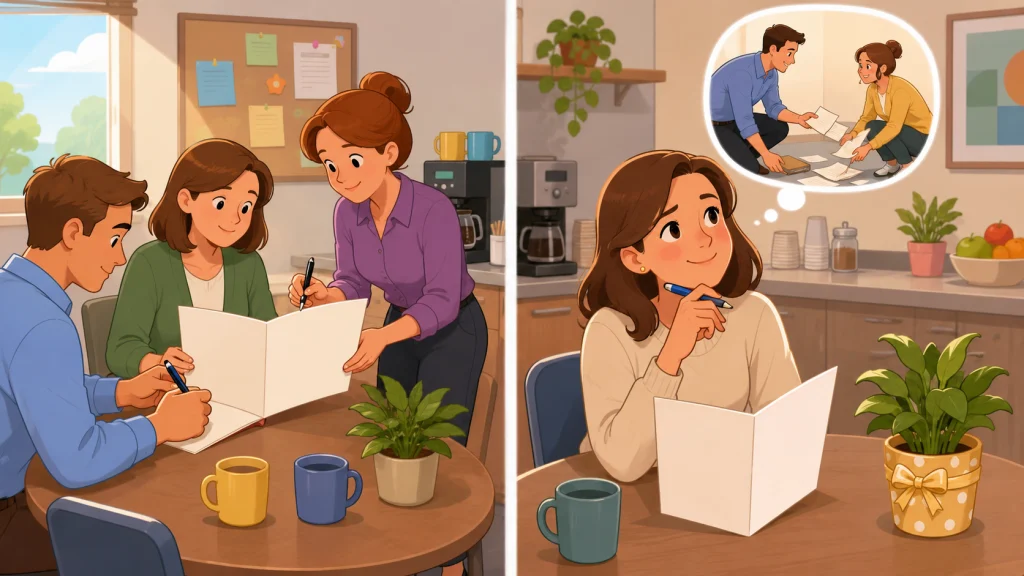
There are two ways to write this. One sounds like it came from HR, polished and safe and built to offend absolutely nobody: best wishes for this exciting new chapter, your contributions will be missed, enjoy this well-earned rest. None of that is wrong, exactly. It’s just not anyone’s actual voice, and the person reading it can usually tell within a sentence. The other version sounds like a person who worked next to this coworker, who noticed something specific about how they did the job, and who’s willing to say it plainly instead of safely.
The gap between those two versions is most of what makes a message worth reading twice. A line like “I’ll never forget how you covered for me that one week without making it weird” does more in twelve words than three sentences of generic well wishes. You don’t need a big reveal or a story everyone in the office already knows. You need one true, specific thing, and the willingness to write it down instead of reaching for whatever sounds appropriately festive. That’s the difference this whole piece is built around, and it’s why some of the short messages below will feel almost too plain. Plain, when it’s true, beats polished almost every time.
Short Retirement Messages for a Coworker
Sometimes you don’t have much room. The card is almost full, or you barely know this person beyond hallway hellos, or you just want something quick and sincere instead of three paragraphs that try too hard. Short retirement wishes for a coworker work fine here, as long as they sound like you meant them. The trick with brevity is specificity. A short line that names one real thing beats a long one that names nothing.
These work for a card signature, a quick Slack message before someone’s last day, or something you say out loud if writing isn’t really your thing. Pick whichever one already sounds like you, then change a word or two until it does. None of them need extra polish once they’re true.
- Congratulations on retirement. The office will run a little less smoothly without you.
- Wishing you a retirement that’s as good as you made this place.
- You earned every bit of this. Enjoy it fully.
- It won’t be the same here without you down the hall.
- Happy retirement. Go do something that doesn’t involve a badge or a login.
- Thanks for everything you taught me without ever making it a lesson.
- Retirement looks good on you already. Go enjoy it.
- You made hard days easier just by being around. Happy retirement.
- Here’s to the next chapter, and to finally sleeping past your alarm.
- Congratulations on retiring. You’ve more than earned the rest.
- Happy retirement to someone who actually made this job better.
- Wishing you a long, slow, happy retirement. You’ve earned every bit of it.
None of these need a single edit if they already sound like you. If you’ve sent a quick celebration message for a coworker before, this works the same way, just aimed at someone leaving rather than someone staying. The shorter the message, the more the tone has to carry, so read it back once before you write it down.

Heartfelt Retirement Messages That Actually Sound Like You
This is where most of the real writing happens. A heartfelt retirement message for a colleague isn’t about how long they worked there. It’s about what they did with the time, and what it was like to be around them while they did it. Think about one specific thing: a habit, a piece of advice, a moment they showed up when it mattered. That one detail will carry more weight than five sentences of generic praise ever could.
If you’ve already written one of their work anniversary messages in years past, you already know the formula. This is the same idea, just with more permission to be sentimental, because there won’t be another one of these for this person. Don’t be afraid to say the thing you’d normally keep to yourself.
- I’ve learned more from watching you work than from any training I’ve ever sat through. Happy retirement.
- You had a way of making everyone around you better at their job without ever saying so directly. That’s rare, and I noticed it the whole time.
- The team will function fine without you. It just won’t feel the same, and I think you know exactly why.
- You were the person who actually meant it when you asked how someone’s day was going. That mattered more than you probably realized.
- I don’t think you ever knew how many times your calm got the rest of us through a bad week. Thank you for that.
- Watching you retire feels like watching someone finally get the rest they spent years giving to everyone else first.
- You made this a place people actually wanted to come to. That’s not a small thing to leave behind.
- I’ll miss the way you always had time for a question, even on your worst days.
- Thank you for never making me feel small for asking something obvious. Happy retirement.
- You taught me how to do this job well, and more importantly, how to do it without losing yourself in it.
- The next person in your role has a lot to live up to. I hope they know that.
- I’ve never worked with someone who made hard news easier to hear. That skill alone deserves a long retirement.
- You were the steady one. Every team needs that, and ours had it because of you.
- I’m going to miss your perspective in meetings more than I expected to.
- You gave this job more patience than it probably deserved some days. Enjoy not having to anymore.
- Thank you for showing up the same way on the good days and the hard ones. That consistency meant something.
- I hope retirement gives you back everything this job borrowed from your time.
- Working alongside you made me better at this, and I don’t say that about many people.
Pick the line that’s actually true about your coworker, not the one that sounds the most poetic. The truth, even a small piece of it, is what makes a message like this worth keeping. Don’t worry about sounding literary, worry about sounding like you.
For a Coworker Who Became an Actual Friend
Some coworkers stop being coworkers somewhere along the way. If this person is also someone you’d actually call on a bad day, your coworker retirement wishes can carry a lot more of your real voice and a lot less formality. You don’t need to pretend the relationship was only ever professional, and you don’t need to keep it inside office language just because that’s where you met.
This is also where it’s fine to bring up something only the two of you would get. An inside joke, a terrible work trip, the time one of you covered for the other in a way that wasn’t strictly allowed. Those details are what separate a friend’s message from everyone else’s on the card.
- I’m losing my favorite person to complain to about this place, and that’s a real loss.
- You’re the reason half my work stories are actually good stories. I’ll miss having you around for the next ones.
- Retirement means I officially have to find someone else to roll my eyes at meetings with. Nobody’s going to be as good at it as you.
- I’m happy for you and a little annoyed at you for leaving me here. Both things are true.
- You were the first person I’d tell good news to here, and usually the only one who actually meant it when they said congratulations back.
- This place made a lot more sense with you in it. I hope the people who get your time next know what they have.
- I don’t think I’ve laughed at work as hard with anyone else. Go enjoy not setting an alarm.
- You know all my worst work stories and somehow still liked me anyway. That’s friendship.
- Our group chat is going to feel different once you’re not also at your desk down the hall.
- I’m genuinely thrilled for you, and genuinely going to miss having you two doors down.
- You made the bad days survivable just by being someone I could vent to in the break room.
- Retirement suits you already. I just wish it didn’t mean fewer lunches with you.
These work best read out loud once before you write them, since the whole point is sounding like the two of you actually talk. If the line doesn’t sound like something you’d actually say to them in person, change it until it does.
Funny Retirement Messages for the Freedom They Actually Earned
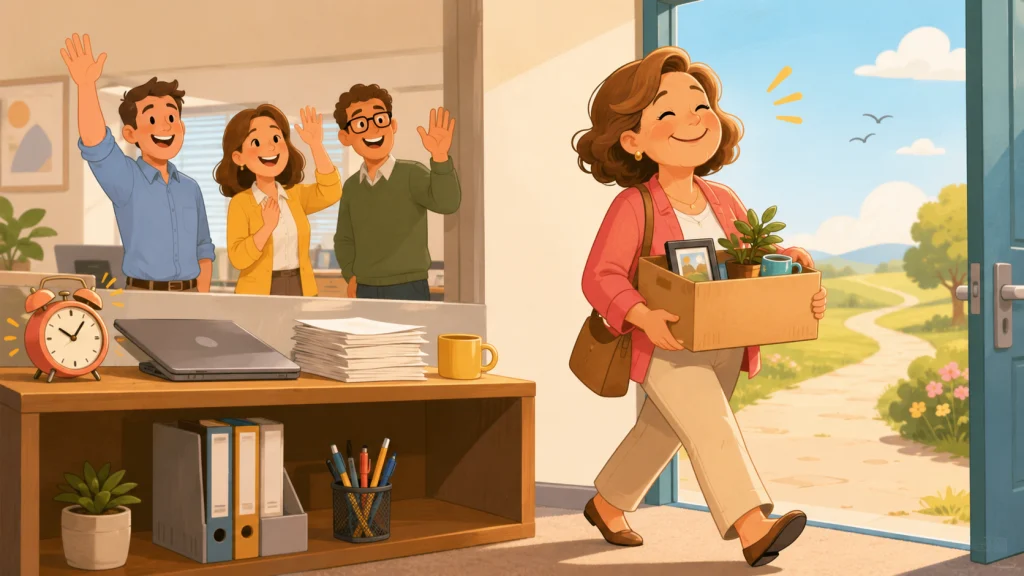
Humor works here because retirement is one of the few work milestones that’s genuinely, unambiguously good news. Nobody’s losing anything except an alarm clock and a commute. A happy retirement coworker message gets to be a little playful without losing the sincerity underneath. The jokes that land best aren’t about the job being terrible, they’re about everything this person finally gets to stop doing, with a little affection sitting right underneath the punchline.
Know your coworker before picking one of these. A joke that’s funny between two people who’ve teased each other for years can land flat from someone who barely spoke to them. When in doubt, pair the joke with one sincere line so the card doesn’t read as only a bit.
- Congratulations on never having to remember a password reset policy again.
- Retirement: the only promotion where the title is “doing whatever you want.”
- You’ve officially graduated from “reply-all” emails forever. Live your best life.
- I hope your new alarm clock setting is simply “whenever.”
- Enjoy every meeting you’ll never have to sit through again.
- Happy retirement. May your inbox finally rest in peace.
- You survived enough team-building exercises for one lifetime. Go be free.
- Retirement means every day gets to feel a little more like Friday. Congratulations.
- No more Mondays. I genuinely hope you appreciate how good that sounds.
- Congratulations on your last performance review ever. You passed.
- You’ve earned the right to ignore every work email that lands in your inbox from now on.
- Happy retirement to someone who’s officially excused from every future office potluck.
- I hope retirement involves a lot of napping out of pure spite for every early meeting you ever sat through.
- Congratulations on escaping before the next reorg. Your timing is impeccable.
- Go enjoy the kind of Tuesday that doesn’t require a calendar invite.
If even one of these gets a real laugh out of them, it’ll outlast every formal line in the card. Pair it with something sincere if you want it to land as a compliment instead of just a punchline. Humor this specific only works once you know the person well enough to aim it correctly.
For a Retiring Boss
Writing to a manager who’s retiring sits a little differently than writing to a peer. There’s usually more distance, even with a good boss, and the message often needs to acknowledge their leadership without sounding like a formal performance review. The goal is the same as everywhere else here: say one true thing instead of every polite thing.
- Thank you for trusting me with more than I thought I was ready for.
- You led without ever making it feel like leading. Happy retirement.
- I learned how to handle pressure by watching how calmly you handled yours.
- Thank you for backing me in the moments I didn’t know I needed it.
- You made this team better by making each of us feel trusted. That’s rare in a boss.
- I’ll miss having someone in charge who actually listened before deciding.
- Thank you for the kind of leadership that didn’t need to announce itself.
- Happy retirement to a boss who made coming to work easier, not harder.
If you’ve written plenty of standard work messages to this person before, this one can finally drop the formality that usually comes with talking to a manager. It’s one of the last times you’ll get to say something to them as their employee, so it’s worth making it count. Even one sentence from this list, adjusted to fit what you actually want to say, is enough.

Three Things Every Retirement Card Already Says
If you’re still wondering what to write in a retirement card for a coworker, it helps to know what’s already been written before you even pick up the pen. Most cards repeat the same three moves, not because they’re wrong, but because they’re easy. Easy isn’t the problem. Forgettable is.
None of these need to disappear from your message entirely. They just need a specific detail attached, or they need to move aside for one line that actually says something only you could say about this person. Think of the table below as a quick translation, not a rulebook.
| What everyone already writes | What to write instead |
|---|---|
| “Wishing you the best in this next chapter.” | Name what the next chapter actually is, if you know it, or name what they’re finally free of. |
| “You’ll be missed around here.” | Say specifically what will be missed: a habit, a piece of advice, a way they handled people. |
| “Enjoy your well-earned rest.” | Mention what they actually plan to do with it, even something small like sleeping in or fishing. |
The difference between the left column and the right one is about ten extra seconds of thought. That’s the whole secret to this entire piece, really. Specific beats generic every single time, even when generic is technically true.
Final Thoughts: One Line Is Usually Enough
You don’t need to use ten of these. Pick one, maybe two if you’re writing both a card line and something separate to say out loud, and let it actually sound like you. The person retiring isn’t going to remember how long your message was. They’re going to remember whether it felt like it came from someone who paid attention.
If this isn’t the only milestone you’re writing for this year, there’s a wider set of congratulations messages for whatever else is coming up, whether that’s a promotion, a new job, or something else entirely worth marking. Whatever kind of retirement message for a coworker you end up choosing, keep it short, keep it true, and let that be enough.
FAQs
🎉 What do you write in a retirement card for a coworker?
Name one specific thing about working with them, whether it’s a habit, a piece of advice, or a moment they showed up for you. That single detail will matter more than any generic well wish you could fit on the card.
✍️ What’s a short retirement message for someone I don’t know well?
Keep it simple and sincere: something like “Congratulations on retirement, the office will run a little less smoothly without you” works fine. You don’t need to fake closeness you don’t have.
😄 How do I write something funny without it sounding rude?
Aim the joke at the job, not at the person, and pair it with one sincere line. A joke about never doing another performance review again reads as affectionate, especially when there’s something genuine right next to it.
🤝 What if this coworker and I were never that close?
That’s exactly when a short, honest message works best. You don’t owe them paragraphs. One true sentence about something you noticed, even something small, says more than a long message written to cover for distance.
👔 What do you say to a boss who’s retiring?
Acknowledge how they led without turning it into a formal review. A line about feeling trusted, supported, or heard under their management usually means more than praising their job title.
🚫 What should I avoid writing in a retirement card?
Avoid the lines that could apply to literally anyone leaving any job, like generic wishes for a new chapter. If the sentence would work for someone you’ve never met, it’s not specific enough to use here.