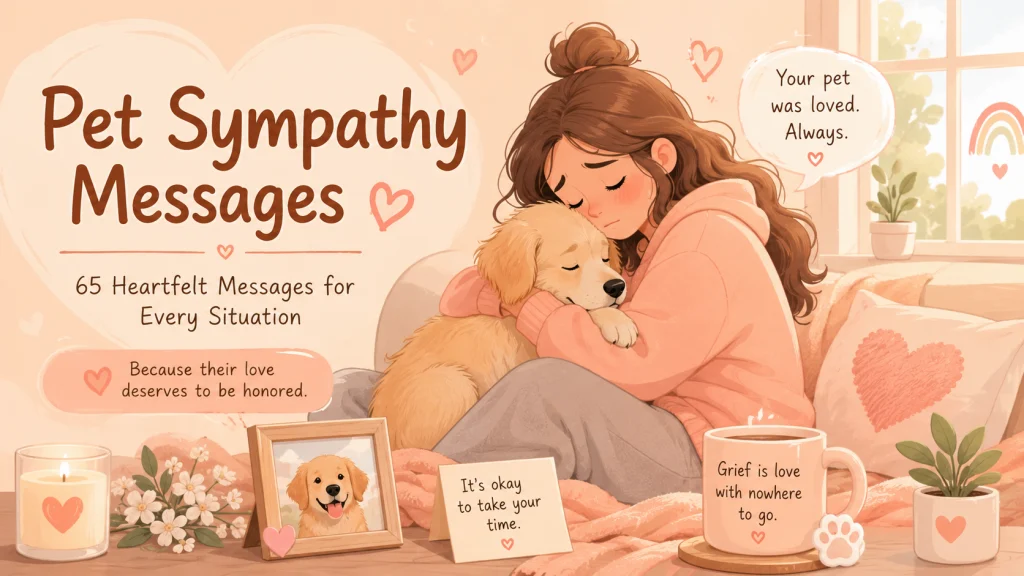
Pet sympathy messages occupy a strange, underserved space. The grief is real. The social support often is not, because too many people still treat the loss of a pet as something to be gotten over quickly rather than properly mourned. The 65 messages here are written for that gap: for the person who wants to say something that honors what their friend is actually going through, not something that accidentally makes it smaller. They are organized by situation, from the immediate loss to the specific weight of a euthanasia decision, to the particular loneliness of losing a pet when you live alone.
The Grief That No One Should Have to Minimize
“It was just a dog.” People actually say that. Pet sympathy messages exist, in part, because of exactly that phrase. Usually the people who say it mean well. They have learned that pet grief belongs in a smaller category, and they reach for what they think is a practical comfort. The person on the other end does not need practical comfort. They need to feel that what they are going through is real and that the person reaching out understands that. For related message ideas, see sympathy message for loss of pet.
Before the messages, one thing worth naming: the phrases that come from kindness but land wrong. One wrong sentence can leave a person feeling more alone than before they heard from you.
- “You can always get another one.” The implication that the pet is replaceable undoes everything else in the message.
- “At least they lived a long, happy life.” True, possibly. Not what the person needs in the first days of grief.
- “They are not suffering anymore.” Said at the right moment, this can help. Said in the first hours, before the person is ready, it can feel like rushing toward a finish line they have not reached yet.
- “I know it is hard, but you will feel better soon.” Putting a timeline on grief almost never helps.
- “It was just a dog” or “just a cat.” This one speaks for itself.
The table below can help you find the right section quickly. If you are not sure where to start, the immediate messages cover most situations.
| If your situation is… | Go to… |
|---|---|
| The loss just happened, in the past day or week | Immediate pet sympathy messages |
| You are close and want to go deeper than acknowledgment | Heartfelt messages |
| The pet died after illness or by euthanasia | Euthanasia and illness messages |
| They live alone and the pet was their main daily companion | Living alone messages |
| You want to send something brief, by text, right now | Short pet sympathy messages |
Immediate Pet Sympathy Messages
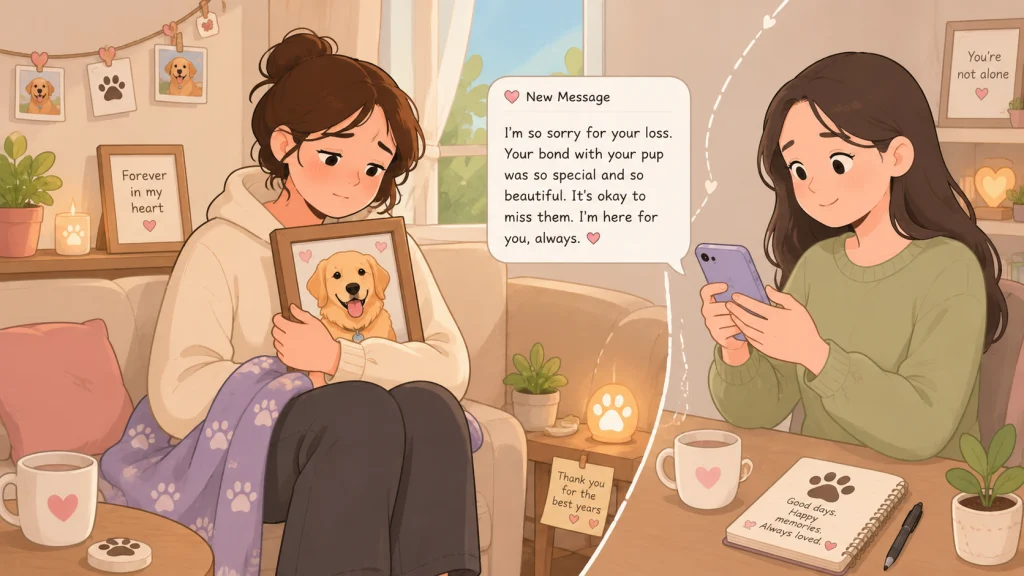
The immediate window, the first day or first week, is when the person has not yet had to field a dozen well-meaning comments that missed the point. A sympathy message for the loss of a pet that arrives before any of that, one that says simply “I know this is real,” can do a great deal. Not because it fixes anything, but because it lands before the person has had to defend their grief to anyone.
These messages work for most relationships: close friends, family, colleagues who knew what this pet meant. If you knew the pet, say something specific about them. If you did not, say something honest about the person. What matters is the acknowledgment, not the length.
- I am so sorry about [Name]. Losing a pet is losing a member of your family, and I do not want you to feel like you have to downplay that around me.
- There are no right words for this, but I wanted you to know I am thinking of you. [Name] was so loved.
- Losing a pet is one of the hardest things there is. Please do not let anyone tell you otherwise. I am here.
- I heard about [Name] and I just wanted to reach out. You do not have to be okay right now.
- Grief is grief. What you are feeling is real and it is allowed to be as big as it is.
- I am thinking of you so much today. Losing [Name] is a real loss, and I am so sorry.
- Some losses do not need to be explained or defended. This is one of them. I am so sorry.
- You gave [Name] a wonderful life. And you loved each other completely. That matters.
- I am so sorry. The house is going to feel so different without them.
- Please do not minimize what you are feeling. What you had together was real, and so is this grief.
- I wanted you to know I am thinking of you. Losing a pet is losing a daily companion, a constant presence, and that is no small thing.
- There is nothing I can say that makes this okay. I just did not want you to go through it feeling alone.
- I heard what happened and I am so sorry. You can talk about it as much or as little as you need. I am here.
- The love you had for [Name] was so clear to everyone around you. That kind of love is worth grieving.
- I am thinking of you. Losing a pet leaves a quiet in the house that is really hard to describe. I hope you know you do not have to describe it to me.
Add the pet’s actual name wherever [Name] appears. If you knew them, one specific detail, a memory or a habit you noticed, makes the message feel grounded in the actual loss rather than the general idea of one.
Heartfelt Pet Sympathy Messages
Heartfelt messages go deeper. They work best when you are close to the person, when you knew their pet, or when you want to move past acknowledgment and say something that actually holds the weight of the relationship between them. These are the kind of thing you would write in a card or a longer message, not a quick text.
The thing most people get wrong with heartfelt messages, whether it is a condolence message for a pet or any kind of loss, is that they try to do too much. They want to name everything and console everything. What lands more often is a message that says one specific true thing and then holds still. You do not need to cover the whole grief. You just need to make the person feel, for a moment, that it is seen.
- What I keep thinking about is how much [Name] loved you. The way they were always glad to see you, always knew when you needed company. That is not a small thing to lose. I am so sorry.
- I have been thinking about [Name] all day. The world has lost a really good animal, and you have lost something much harder to name than a pet. I am here.
- There is a particular kind of grief that comes with losing the one who was always just there: waiting for you, happy to see you, asking nothing of you. [Name] was that for you, and losing that is real and it is hard.
- You were the whole world to [Name]. I hope that is something you can hold onto right now, even when everything else feels terrible.
- I know people will say things that are well-meaning and miss the point. I just want to say: this is a loss. A real one. And you are allowed to feel it fully.
- The love between a person and their pet is one of the most uncomplicated kinds there is. Completely given, completely received. Losing [Name] is losing that, and that is enormous.
- You took such good care of [Name], and they had a life full of love because of you. That does not make this hurt less. But I hope it is something.
- There is no timeline on this. You do not have to feel better soon. Please just let it be what it is, and know I am here for as long as that takes.
- [Name] was lucky to have found you. And you were lucky to have them. I am thinking of you so much right now.
- I have been thinking about all the times you talked about [Name] and how obvious it was that they were not just a pet to you. That kind of love is worth every bit of this grief.
- Some presences are so consistent that you stop noticing them, and then they are gone, and the absence is everywhere. That is what I imagine you are feeling. I am so sorry.
- Losing a pet is losing a relationship. Not a thing, not a possession. A relationship. I hope you can let yourself grieve it that way, with no apology for how much it hurts.
For more messages that go beyond the immediate loss and into the longer grief of missing someone woven into your daily life, there is a wider collection of sympathy messages for every kind of loss that covers both pet loss and the loss of people who shaped your world in quieter, harder-to-name ways.
When the Pet Died After Illness or by Euthanasia
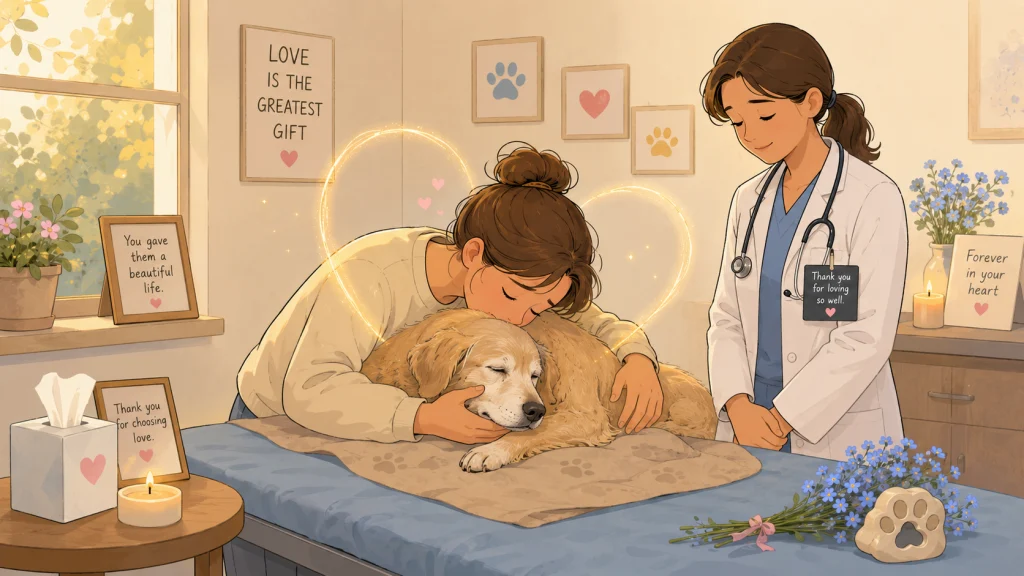
There are two things that make this kind of loss different from a sudden one. The first is anticipatory grief: the mourning that begins during the illness, long before the death. By the time the pet dies, the person may have been grieving for weeks or months already. A message that acknowledges only the ending will miss most of what they have been carrying.
The second is the weight of the euthanasia decision. When someone has had to choose the moment, that choice can become guilt very quickly, even when the decision was made entirely out of love. I have heard, from more than one person, that the messages that helped them most were the ones that named the decision directly and said: that was love, not failure. Most sympathy messages do not go there. The ones below do.
- Watching a pet get sick is its own kind of grief, and having to make the final decision is one of the hardest things a person can do. You did it out of love. Please hold onto that.
- The decision you made for [Name] was the most loving thing you could have done. I know that does not make it easier. I am so sorry.
- You had to carry something really heavy with the decision about [Name]. Choosing to spare them more pain is not something you should ever question. That was love.
- Anticipatory grief is real grief. You have been losing [Name] for a while now, long before today. It is okay if this feels older and more complicated than people around you realize.
- I am so sorry you had to go through this. The weight of that decision is enormous, and you should not carry it alone. I am here.
- What you did for [Name] at the end was an act of love. An incredibly hard one. I hope you can feel that, even a little.
- The hardest part of loving a pet is sometimes making the decision that is best for them and not for us. You did that. I am so sorry.
- You did not give up. You made a choice that put [Name]’s comfort first, even when it cost you everything. That is what love does when it has no other way to help.
- I have been thinking about you since you shared what you were going through with [Name]. The last stretch is so hard, and the final decision even harder. I am glad you are not alone in this.
- The weight of that last decision stays with people for a long time. I want you to know that what you chose was the right thing, even if it does not feel that way right now.
- You gave [Name] a peaceful ending, even though it cost you so much. That kind of love is not failure. I am so sorry you are carrying this.
- I know the decision you made was not easy. I know you made it because you loved [Name] too much to let them suffer. That is exactly who you are, and I am so grateful [Name] had you.
If the person you are writing to is struggling with how to be present for someone else through a longer stretch of grief, the collection of words of comfort for loss and difficult times covers that in more depth, including how to show up after the first days have passed.
For Someone Who Lived Alone with Their Pet
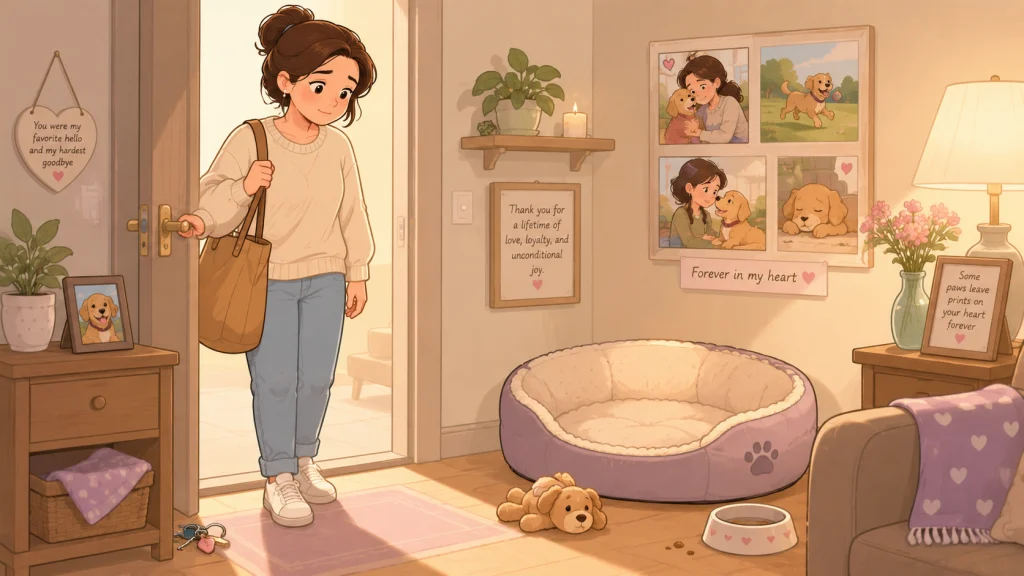
This is the loss that is hardest to find addressed anywhere, and it has its own specific texture. When someone lives alone and loses a pet, they are not just losing an animal companion. They are losing the structure of daily life that the pet was woven into: the one who was there when they came home, the reason the morning had a shape, the presence that made a quiet apartment something other than just quiet. Messages for someone who lost a dog, a cat, or any beloved pet need to name that specific loss, or they miss most of what the person is going through.
Most people do not think to address the living-alone dimension directly. They send the same message they would send to anyone, and it lands at a slight distance. The person living alone with their pet is not just grieving the loss. They are grieving the silence that follows it, every morning, every evening, every time they come through the door.
- Losing a pet when you live alone is its own particular loss. The house is not just quieter. It is completely changed. I am thinking of you and the specific stillness you are living in right now.
- I know [Name] was not just your pet. They were your daily company, your routine, your reason to come home. That is a specific kind of loss, and I do not want you to feel like you have to explain it.
- There is a grief that comes with losing the one who was always there when you walked through the door. When you live alone, that presence is everything. I am so sorry.
- Losing a pet is hard. Losing a pet when they were your main source of daily companionship is something different, something quieter and harder to put into words. I am here if you want to talk.
- I have been thinking about how the mornings must feel right now. The routines that are suddenly gone. Please reach out if you need anything at all.
- You should not have to carry this by yourself. Please reach out. I mean it.
- The specific loneliness of losing a pet when they were your primary companion is real and it is significant. I am here.
- I know [Name] was your person, in every way that matters. The one who was always glad to see you. I am so sorry they are gone, and I am so sorry for the quiet that follows.
If the person is a close friend, showing up can matter more than anything written. But sending something first tells them you understand what they are dealing with and that you are not going to ask them to make it smaller.
Short Pet Sympathy Messages to Send by Text
Sometimes you want to send something immediately and do not have the words for anything longer. That is fine. A short, honest text often does as much as a long, careful message, sometimes more, because it arrives quickly and without the weight of someone having labored over it. The person on the other end is not counting words. They are noticing whether or not you showed up.
These messages are designed to be sent as-is or with minimal personalization. Add the pet’s name where it fits. Short does not mean thin. A message that says “I know this is real grief and I am here” in twelve words is doing exactly what it needs to do. For more options in this format, there is a full set of short sympathy messages for any kind of loss that you can adapt to the relationship and the situation.
- I am so sorry about [Name]. I just wanted you to know I am thinking of you.
- Losing a pet is real grief. Please take care of yourself today.
- I heard about [Name]. Sending so much love your way.
- I am so sorry. [Name] was such a good [dog/cat]. You gave them a wonderful life.
- This is a real loss and you are allowed to feel it. I am here.
- You do not have to be okay today. Just wanted to check in.
- So sorry. [Name] was lucky to have you.
- Thinking of you and [Name] today. So much love.
- I know how much [Name] meant to you. I am so sorry.
- Grief is grief. Please do not let anyone minimize this. I am here.
- So sorry for your loss. [Name] was loved.
- No words. Just here for you.
- Sending you love today. Take whatever time you need.
- I am thinking of you today, especially in all the quiet moments [Name] used to fill.
- You were the person who loved [Name] best. They knew it too.
- I am so sorry. The house must feel so different right now.
- Losing [Name] is a real loss. I hope you are being gentle with yourself.
- I am so sorry you lost [Name]. They were so lucky to be loved the way you loved them.
If you are not sure which message to send, pick the one that sounds most like you. The voice matters almost as much as the words themselves.
Final Thoughts: Send Something
People often hold back on sending a pet sympathy message because they worry it will seem like they are making too big a deal of it. The opposite is almost always true. People who have lost a pet are almost always grateful to hear from someone, especially from someone who names the loss directly rather than carefully stepping around it. What feels like too much to the sender almost never feels like too much to the person who just lost their animal companion.
Send something. It does not have to be the perfect message. The person on the other end is not looking for eloquence. They are looking for the feeling that someone saw what happened and cared enough to say so. That is the whole job, and almost any of the messages above can do it.
FAQs
🐾 What do you say to someone who just lost their pet?
Keep it simple and honest. Name the loss directly and do not suggest they will feel better soon. Something like “I know this is real grief and I am here for you” does more than anything elaborate. The goal is for them to feel seen, not managed.
💔 Is it okay to send a sympathy card when someone loses a pet?
Yes, and for many people it means more than they expect. Sending a card signals that you took the loss seriously enough to put something physical in the mail. It does not have to be long, just genuine.
🐶 What do you say when someone’s dog dies?
Say something that treats the loss like a real loss. Avoid “you can get another one” or “at least they lived a long life.” Try: “I know how much [Name] meant to you, and I am so sorry.” Then let them lead any further conversation.
😔 What should you NOT say when someone loses a pet?
Avoid anything that minimizes or rushes the grief: “it was just a dog,” “you will feel better soon,” or “you can always get another one.” These leave the person feeling like they have to defend their own grief, which is the last thing they need.
🕯️ Should you reach out even if you did not know the pet?
Yes. You do not need to have known the pet to send something meaningful. Say something honest about the person and what you know of how much their pet meant to them. That is more than enough.
✍️ Should a pet sympathy message be long or short?
Short is almost always fine. A single honest sentence lands harder than three paragraphs trying to cover everything. If you knew the pet, add one specific detail. If you did not, say one true thing about the person and the love they clearly had for their animal.